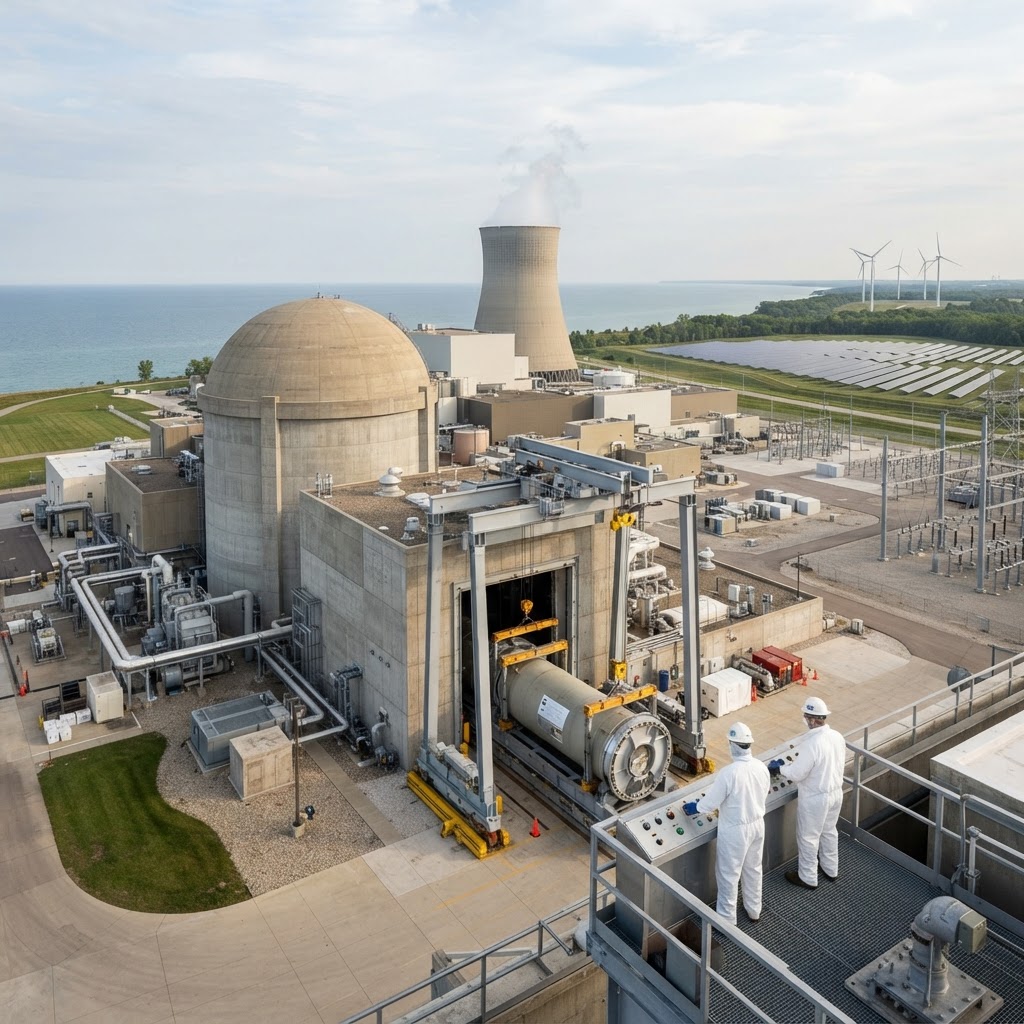
The U.S. nuclear sector reached a historic inflection point this week as Holtec International confirmed the commencement of fuel loading at the Palisades Nuclear Power Plant in Michigan. This operation marks the final technical hurdle for the facility, which is poised to become the first commercial nuclear plant in American history to return to service after entering decommissioning. By transitioning into Mode 6 under its regulatory technical specifications, the plant is now firmly on the path to restoring 800MW of carbon-free, baseload power to the regional grid. This milestone underscores a broader national strategy to leverage existing nuclear assets to meet surging electricity demand.
Key Findings
The restart of Palisades represents a significant validation of the Department of Energy’s (DOE) strategy to revitalize the domestic nuclear industrial base. Following the financial close of a $1.52 billion loan guarantee in 2024, Holtec has successfully navigated a complex series of refurbishments, including the reinforcement of steam generator tubes, the replacement of control rod drive mechanism nozzles, and extensive chemical decontamination of the primary system. The project has benefited from consistent federal support, with the DOE issuing multiple loan disbursements to maintain momentum. Industry analysts note that the successful transition from large-scale construction to fuel loading demonstrates that the technical challenges of restarting a mothballed reactor are manageable, provided there is sufficient capital and regulatory alignment. The facility’s return is expected to provide critical grid stability, particularly as Michigan and the broader Midwest face increasing pressure from data center expansion and the electrification of industrial processes.
Industry Response
The nuclear industry has hailed the progress at Palisades as a blueprint for future fleet expansion. Holtec’s methodical approach, characterized by close coordination with the Nuclear Regulatory Commission (NRC), has been cited by trade groups as a model for operational readiness. 'The restart of Palisades is not just about one plant; it is about proving that we can reclaim and optimize our existing energy infrastructure,' noted a spokesperson for the American Nuclear Society. Investors and utility executives are closely monitoring the project, as it serves as a bellwether for other potential restarts, such as the Duane Arnold facility in Iowa, which recently secured a $1.9 billion loan agreement with the DOE. Policymakers emphasize that the project’s success is essential for meeting long-term decarbonization targets while maintaining the reliability of the baseload power supply, effectively shifting the narrative from plant closures to life-extension and reactivation.
What's Next
With fuel loading now underway, the focus shifts to the final sequence of testing and operational readiness inspections required for grid synchronization. Holtec is expected to complete the loading process in the coming weeks, followed by a series of low-power physics tests to ensure the reactor core meets all safety parameters. Once these tests are verified by the NRC, the plant will move toward full-power commercial operation. Beyond the immediate restart, the site is becoming a hub for broader nuclear innovation; Holtec is simultaneously advancing component fabrication for its SMR-300 testing facility at the Idaho National Laboratory. The successful commissioning of Palisades will likely serve as a primary catalyst for the next wave of DOE-backed nuclear financing, including the $17.5 billion recently earmarked for long-lead components across ten AP1000 reactors. Market participants are now looking for a firm date for the first megawatt-hour of output, which would solidify the economic case for further nuclear asset reclamation across the United States.