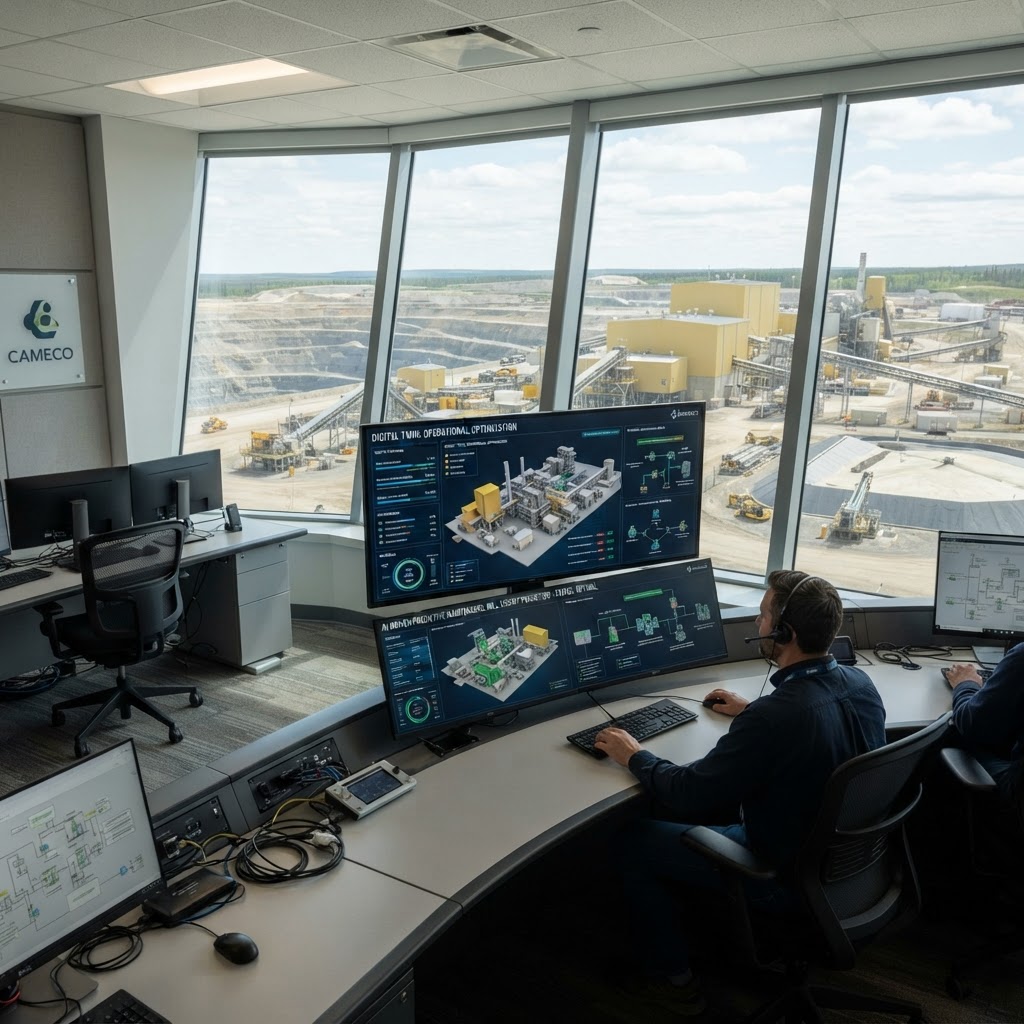
Cameco Corp. is accelerating the integration of artificial intelligence and advanced data analytics across its primary uranium mining and milling operations, marking a significant shift in how nuclear fuel producers manage complex industrial workflows. As global electricity demand surges—driven largely by the proliferation of energy-intensive data centers—the world’s largest publicly traded uranium producer is leveraging machine learning to optimize ore recovery and predict equipment maintenance cycles in real time. This digital transformation at key Canadian sites aims to maximize operational efficiency, ensuring reliable feedstock for the expanding fleet of small modular reactors and traditional nuclear plants, while demonstrating a scalable blueprint for AI adoption within the broader energy transition infrastructure.
Key Findings
The deployment of AI-integrated systems allows Cameco to move from reactive to predictive operational models. By utilizing digital twins of its processing circuits, the company can simulate various throughput scenarios, identifying bottlenecks before they impact production volumes. This granular visibility is critical for maintaining consistency in uranium concentrate output, a key factor in satisfying long-term supply contracts with utilities facing a tightening market. Furthermore, the implementation of automated sensor arrays across milling operations provides high-fidelity data that informs smarter energy consumption. By correlating power usage with specific processing phases, the company has successfully reduced operational overhead while simultaneously increasing the recovery rates of uranium from mined ore. These technology-driven improvements are not merely incremental; they represent a fundamental modernization of the fuel cycle, positioning Cameco to better navigate the volatility of global commodity markets. By minimizing unplanned downtime through AI-guided maintenance alerts, the company ensures that its infrastructure remains resilient, capable of meeting the accelerated delivery timelines requested by governments and private energy providers worldwide as they pivot toward carbon-neutral baseload power sources.
Industry Response
Market analysts and industry stakeholders have lauded the shift as a necessary evolution for the nuclear fuel sector. Given that uranium supply chain constraints often stem from operational inefficiencies in mining and milling, the application of AI is being viewed as a strategic hedge against supply uncertainty. Industry experts note that the integration of automation and predictive analytics allows producers to maintain stable output even as they move into more geologically complex deposits. The marriage of AI with hard-rock mining and milling is no longer optional; it is becoming a competitive imperative. Policy observers further note that these efficiencies align with government mandates to bolster domestic energy security through reliable nuclear power. By streamlining the production process, companies like Cameco are effectively lowering the cost-per-kilowatt of nuclear energy, making it an even more attractive candidate for utilities replacing fossil-fuel baseloads. Trade groups emphasize that these digital advancements serve as a force multiplier, allowing the existing mining workforce to operate more safely and effectively by automating repetitive, high-risk tasks while concentrating human expertise on strategic decision-making and optimization initiatives that drive long-term value for investors and grid operators alike.
What's Next
The immediate roadmap focuses on scaling these AI-driven modules from pilot sites to broader fleet-wide application by late 2026. Cameco’s focus is expected to remain on intelligent mining, where autonomous drilling and hauling equipment are seamlessly integrated with mill-side data processors to create a continuous, closed-loop production environment. Investors should monitor quarterly updates regarding production yields at the Cigar Lake and McArthur River operations, as these will serve as the primary metrics for the success of the AI deployment. Beyond internal optimization, the company is exploring partnerships with technology firms to develop specialized AI models tailored for the unique challenges of uranium extraction in northern climates. Milestones to watch in the coming year include the commissioning of expanded data-processing hubs at its facilities and the rollout of new automated mineral-sorting technologies. As the company continues to demonstrate these operational gains, the market expects to see a tightening of the cost-curve, reinforcing Cameco's position as a low-cost, high-reliability leader. Long-term, these technological investments provide a durable competitive advantage, ensuring the company can respond rapidly to the shifting requirements of global utilities as the world enters a period of unprecedented nuclear energy expansion.