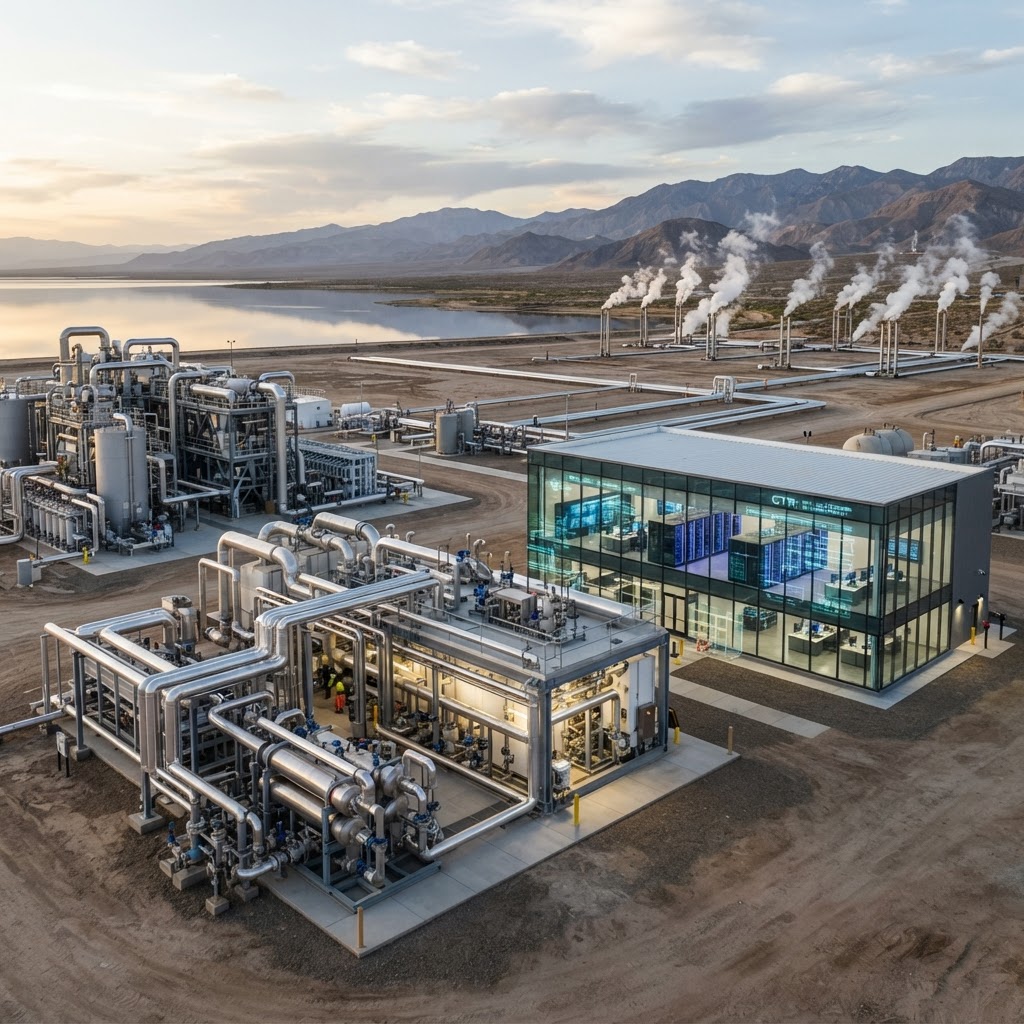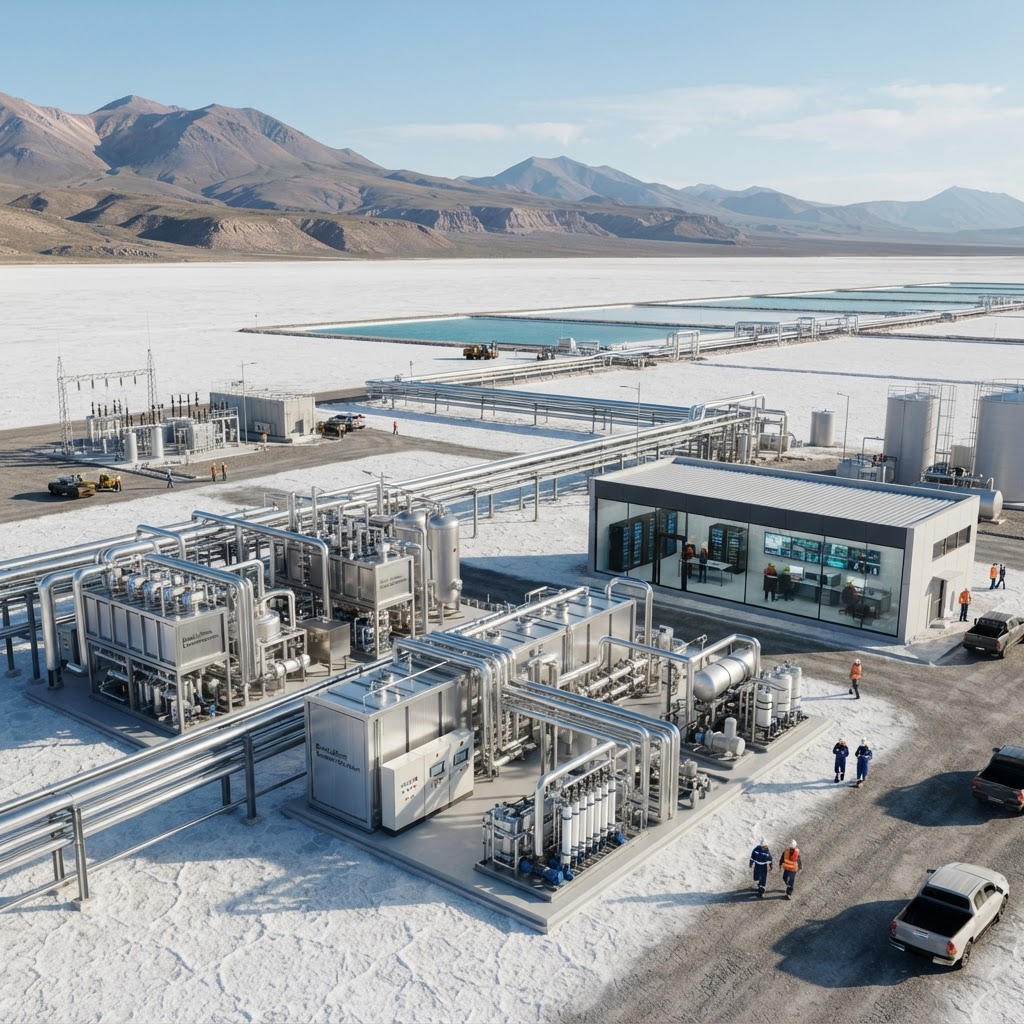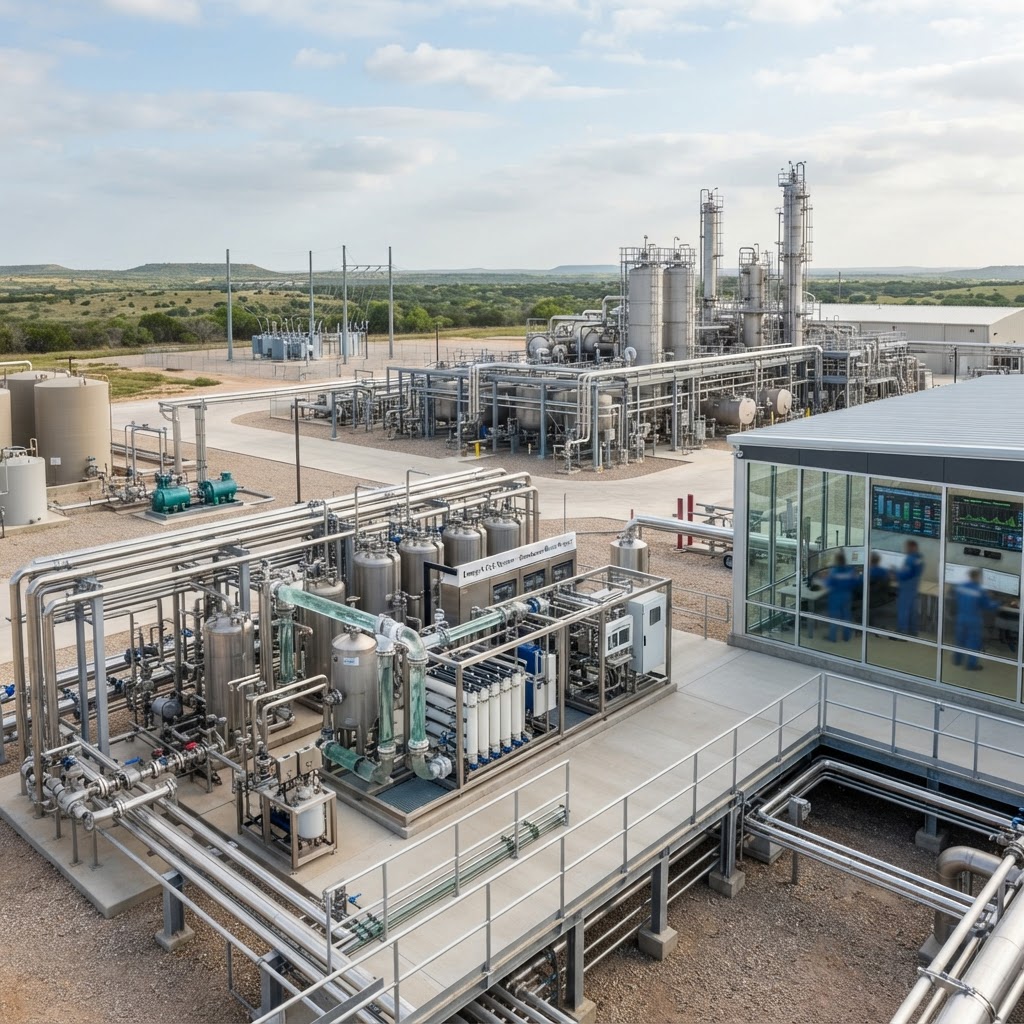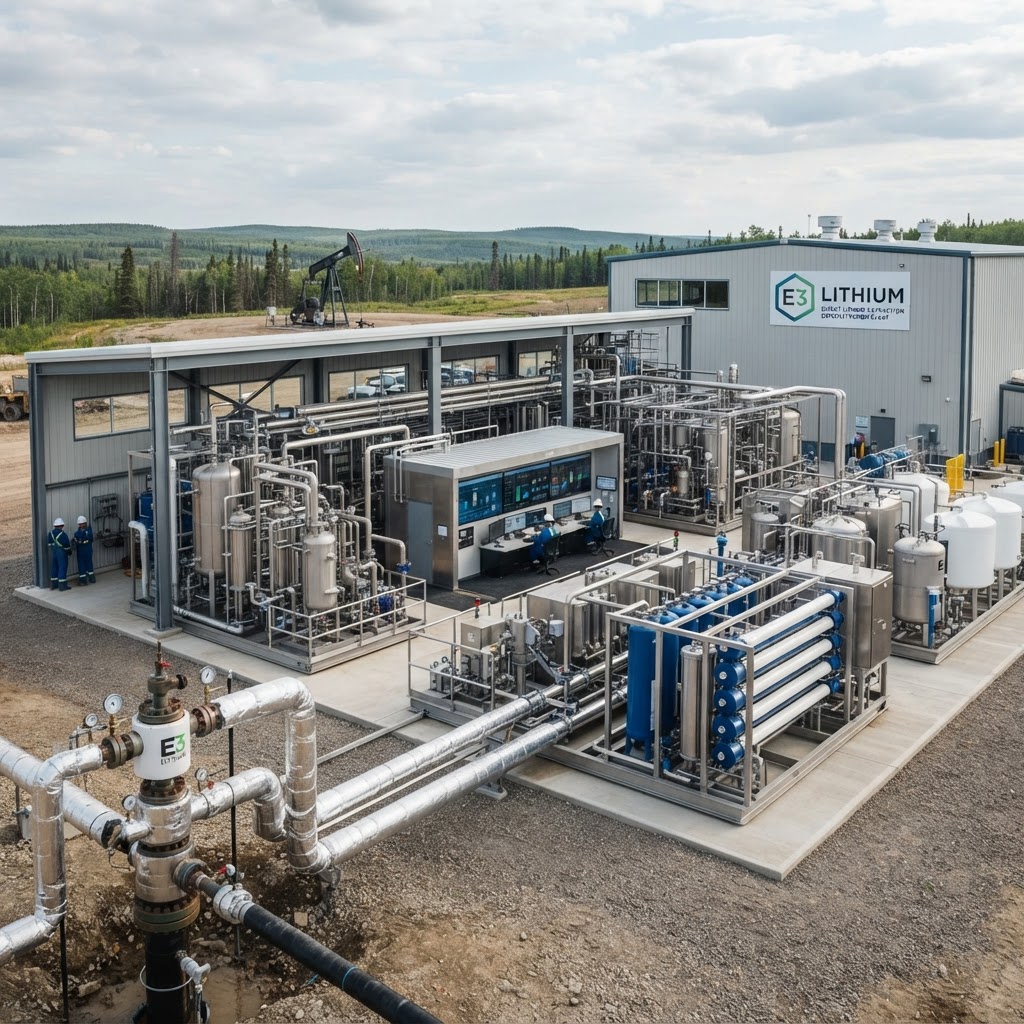
Calgary-based E3 Lithium Ltd. has formally laid out operational milestones to commission Canada's first fully integrated Direct Lithium Extraction demonstration facility at its Clearwater Project in Alberta. The move builds on pilot extraction recoveries of 94% and positions the developer to produce battery-quality lithium carbonate directly from subterranean oilfield brines. Backed by non-dilutive government grants totaling tens of millions of dollars and an established energy regulatory framework, the project represents a major step toward establishing commercial domestic lithium refining within North America. The initiative taps repurposed petroleum infrastructure to lower capital intensity and de-risk supply chains ahead of planned commercial construction.
Key Findings
E3 Lithium's demonstration facility scales up proprietary and third-party direct lithium extraction (DLE) sorbent systems designed to capture lithium ions from Devonian-era Leduc aquifer brines. Previous pilot operations proved the technology could upgrade low-grade brine into a 909 mg/L lithium concentrate with continuous fluid reinjection. The new demonstration circuit will test continuous conversion from raw brine through chemical purification into battery-grade lithium carbonate.
The project benefits from an advantageous resource base in central Alberta's Bashaw District, containing an estimated 16.2 million tonnes of lithium carbonate equivalent in Measured and Indicated resources. By leveraging existing oilfield boreholes and surface footprints, the operation circumvents extensive land disruption, eliminates freshwater drawdowns through closed-loop recycling, and cuts upfront drilling expenditures.
Financially, the company entered 2025 with $18.4 million in working capital alongside approximately $23 million in undrawn grant commitments, bolstered by federal backing through Canada's Strategic Innovation Fund and provincial capital via Emissions Reduction Alberta. Technical validation at this demonstration scale underpins E3's upcoming commercial feasibility study, establishing engineering baselines for an eventual commercial output targeted at up to 200,000 tonnes of battery-grade lithium annually across regional development phases.
Industry Response
The industrial integration of DLE within brownfield energy basins is winning broad support from provincial regulators and critical mineral market analysts seeking resilient North American battery component manufacturing. E3 Lithium Chief Executive Officer Chris Doornbos highlighted that commissioning the demonstration facility will firmly validate commercial viability, noting the company's clear drive to make the Clearwater Project fully shovel-ready by 2026.
Justin Riemer, Chief Executive Officer of Emissions Reduction Alberta, praised the cross-sectoral operational model, observing that adapting existing oil and gas subsurface data and processing know-how transforms industrial co-produced brine into a high-value supply line for global automotive supply chains. Market observers emphasize that localizing battery-grade carbonate output aligns with rising original equipment manufacturer demand for lithium-iron-phosphate (LFP) chemistries, which now favor carbonate inputs over hydroxide amid aggressive cost-cutting targets in EV production.
Furthermore, resource strategists note that Alberta's newly enacted Mineral Resource Development Act provides regulatory clarity absent in other continental brine plays. The standardized framework establishes rigorous environmental monitoring while expediting brine-hosted processing permits, creating a blueprint that Canadian mineral authorities hope will accelerate capital formation across the broader Leduc reef complex.
What's Next
Operational sequencing will see the demonstration plant commissioned during the third quarter, inaugurating continuous flow tests and downstream conversion. The chemical facility will generate qualification-grade carbonate samples destined for automotive cathode and cell partners currently conducting supply due diligence.
Concurrently, E3 Lithium is completing commercial engineering to deliver its definitive feasibility study, alongside filing Central Processing Facility license applications under the Alberta Energy Regulator. Progressing these filings aims to secure all primary development permits within the next 12 to 18 months, enabling final investment decisions.
On the commercial front, project management is working to convert ongoing memorandum discussions into binding offtake agreements or joint-venture equity participation before early 2026. If offtake covenants and commercial engineering align as planned, Clearwater is slated to break ground in mid-2026, targeting Canada's first commercial-scale brine-derived lithium output by late decade to feed burgeoning North American grid-scale battery and electric mobility supply chains.