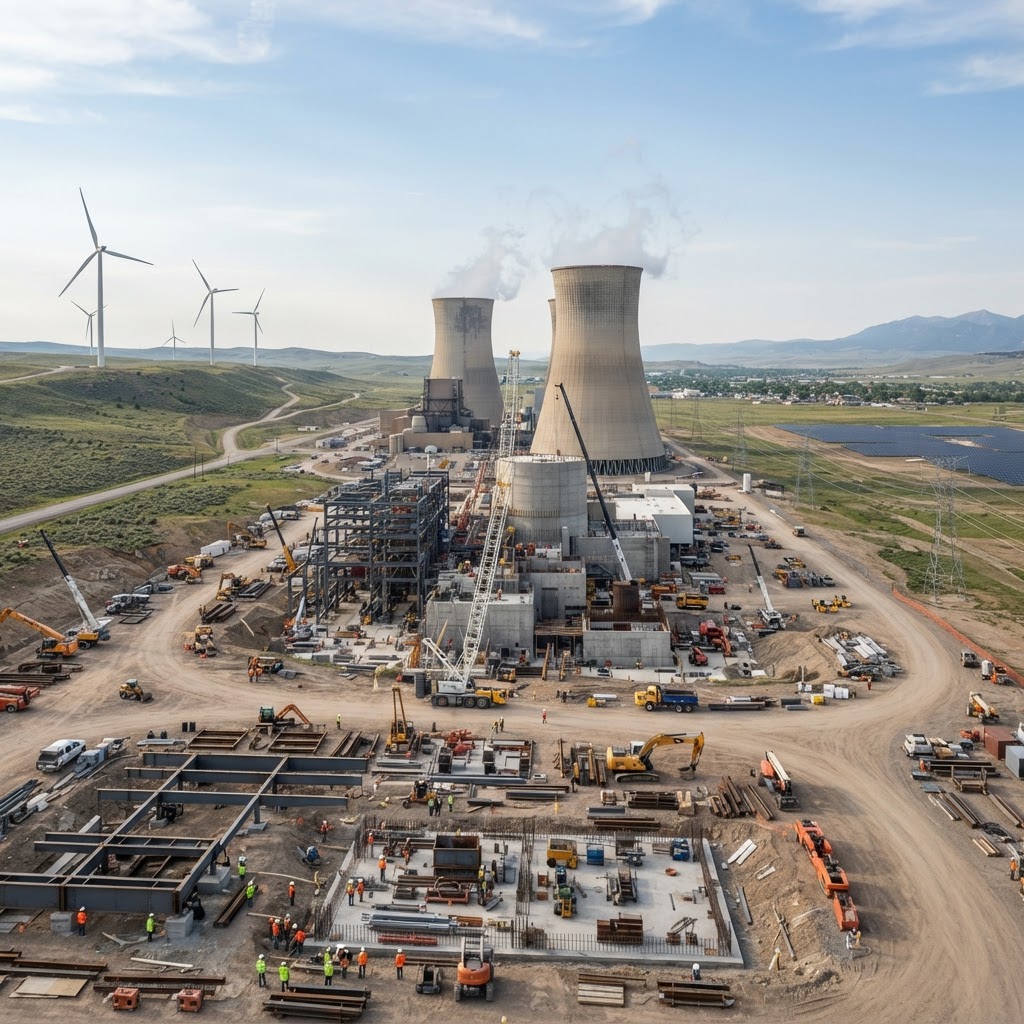
TerraPower has officially commenced construction on its pioneering Natrium advanced nuclear reactor in Kemmerer, Wyoming, signaling a transformative shift for the U.S. energy landscape. By repurposing the site of a retiring coal facility, the project serves as a critical blueprint for integrating next-generation nuclear technology into the existing grid. The 345-megawatt sodium-cooled fast reactor, developed in partnership with GE Vernova and Hitachi Nuclear Energy, features an innovative molten salt energy storage system. This milestone, supported by the U.S. Department of Energy’s Advanced Reactor Demonstration Program, underscores a broader industry momentum toward reliable, dispatchable, and carbon-free power solutions designed to meet the rising electricity demands of the 21st century.
Key Findings
The Natrium project represents a significant leap in nuclear engineering, moving beyond traditional light-water reactor designs. The facility’s integrated molten salt storage system allows the plant to boost its output to 500 megawatts during periods of peak demand, providing essential grid resiliency. This capability is particularly valuable for balancing the variable nature of renewable energy sources like wind and solar. Furthermore, the project is a cornerstone of the U.S. Department of Energy’s efforts to revitalize the domestic nuclear supply chain. With a 50/50 cost-share agreement, the public-private partnership provides up to $2 billion in federal support, matched by private capital. This financial structure has successfully de-risked the project, attracting significant interest from industrial partners and technology firms looking to secure long-term, zero-carbon power for data centers and other energy-intensive operations. The construction phase is expected to mobilize a workforce of approximately 1,600, providing a substantial economic boost to the region while establishing a replicable model for future fleet deployments across North America and international markets.
Industry Response
The commencement of construction has drawn widespread praise from policymakers and industry leaders who view the project as a vital component of American energy independence. Wyoming Governor Mark Gordon highlighted the project’s role in maintaining the state’s legacy as a premier energy producer, noting that the transition to next-generation nuclear technology reflects a commitment to innovation and high-quality job creation. U.S. Senator John Barrasso emphasized that Wyoming’s status as a leading uranium producer makes it the ideal location for such advanced infrastructure. Industry analysts point to the project’s strategic alliances—including a framework for future deployment with KBR and a supply agreement with Meta—as evidence of strong commercial viability. By focusing on a modular, scalable design, TerraPower is addressing the long-standing industry challenge of high capital costs associated with first-of-a-kind nuclear builds. The project is widely regarded as a test case for the viability of advanced reactors in a competitive electricity market, with many observers noting that the successful integration of storage and generation could set a new standard for utility-scale clean energy projects globally.
What's Next
With the construction permit secured and site work underway, the project is now focused on the multi-year build-out of the reactor and its supporting facilities, including the Sodium Test and Fill Facility. TerraPower aims to complete the Kemmerer plant by the end of the decade, a timeline that remains a critical benchmark for the broader advanced nuclear sector. Future milestones include the procurement and qualification of high-assay low-enriched uranium (HALEU) fuel, a key supply chain hurdle that the company is actively managing. Beyond the Wyoming site, TerraPower is already looking toward the commercialization of a fleet of Natrium reactors. The company’s agreement with Meta to explore up to eight additional plants by 2035 serves as a primary catalyst for scaling the technology. As the project progresses, the industry will closely monitor the integration of the molten salt storage system with the regional grid, as this will provide real-world data on the reactor's ability to provide 24/7 baseload power while simultaneously acting as a flexible, grid-balancing asset. Success in Kemmerer is expected to unlock further private investment and provide a clear pathway for the deployment of advanced nuclear energy as a foundational element of the global energy transition.