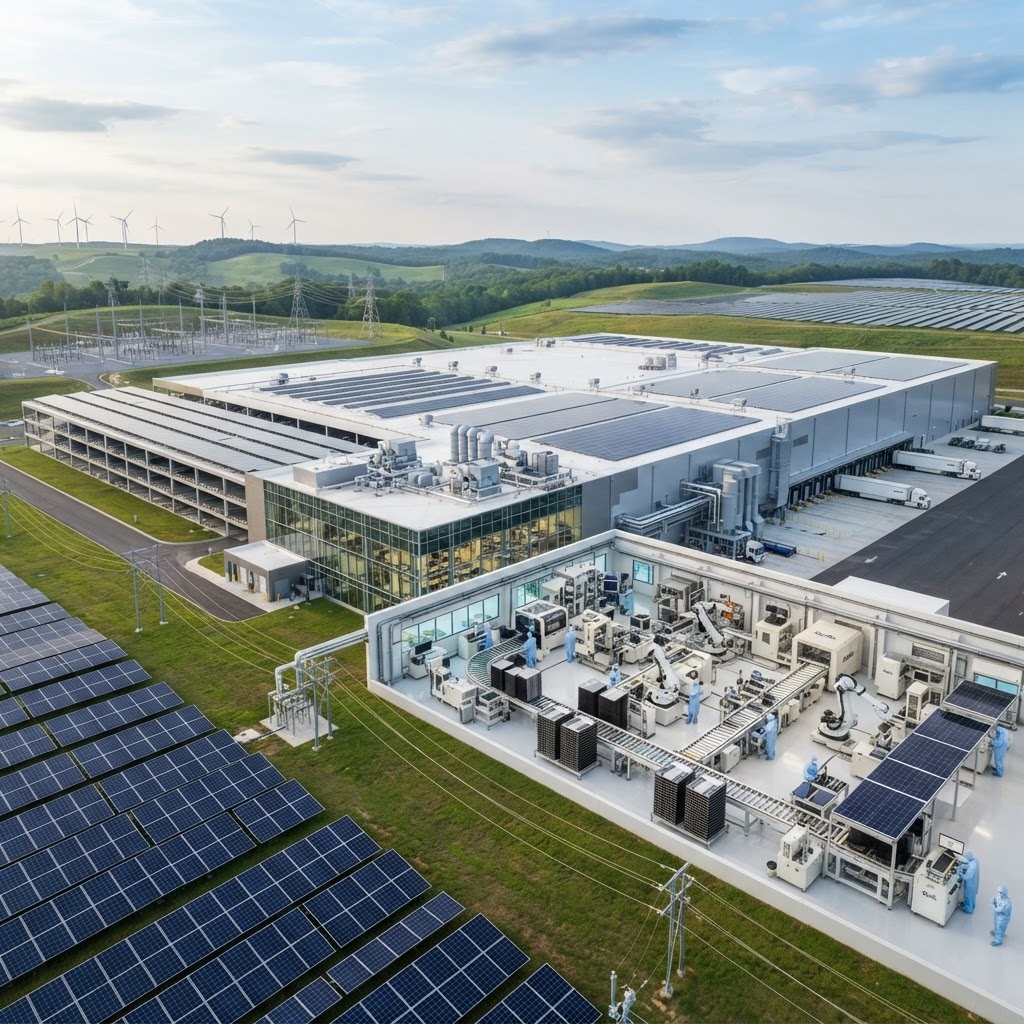
The U.S. Department of Energy’s Loan Programs Office has officially closed a $1.45 billion loan guarantee for Hanwha Qcells, marking a pivotal milestone in the revitalization of American solar manufacturing. This financing supports the company’s massive, vertically integrated facility in Cartersville, Georgia, designed to produce silicon ingots, wafers, cells, and finished modules. As the largest project of its kind in the Western Hemisphere, the plant aims to reestablish a domestic supply chain for critical photovoltaic components. By bridging the gap between raw material processing and final panel assembly, this investment underscores a strategic shift toward energy independence and long-term industrial resilience in the U.S. renewable sector.
Key Findings
The Cartersville facility represents a significant leap in domestic capacity, with a nameplate production target of 3.3 gigawatts of solar panels annually. This output is sufficient to power approximately 500,000 American households, directly addressing the nation's growing demand for clean electricity. Beyond the hardware, the project is a major economic engine for the region, projected to create roughly 1,650 full-time operational roles and 1,200 construction jobs. By producing ingots and wafers domestically, the facility reduces reliance on international supply chains, a critical vulnerability in the global energy transition. Furthermore, the project is expected to mitigate over 5 million tons of CO2e emissions annually, aligning with broader federal decarbonization goals. The integration of the full supply chain under one roof allows Qcells to qualify for the Inflation Reduction Act’s domestic content bonuses, providing a competitive edge for solar developers utilizing these panels in utility-scale projects across the country.
Industry Response
The move has been widely lauded by industry analysts and policymakers as a blueprint for successful industrial policy. The Department of Energy emphasized that the facility is the first fully integrated silicon-based solar manufacturing site constructed in the United States in over a decade. Market observers note that the loan guarantee provides the necessary capital certainty to scale operations in a capital-intensive sector. Trade groups have highlighted that this investment is not merely about panel assembly but about securing the foundational materials—ingots and wafers—that have historically been outsourced. By de-risking the project, the LPO has signaled strong federal support for domestic manufacturing, which analysts suggest will encourage further private capital deployment into the U.S. solar ecosystem. The project is viewed as a cornerstone of the 'Investing in America' agenda, demonstrating how targeted federal financing can catalyze private sector growth while simultaneously strengthening the national grid's supply chain security and creating high-quality manufacturing jobs in the American South.
What's Next
With the loan finalized, the immediate focus shifts to ramping up full-scale production across all manufacturing lines at the Cartersville site. While the facility has already begun producing modules, the integration of ingot and wafer production remains the primary technical milestone for the coming months. Developers and utility-scale project managers are closely monitoring the facility’s output, as the availability of domestically produced components will be a key factor in project financing and tax credit eligibility for upcoming solar installations. Looking ahead, the success of this hub will likely serve as a benchmark for the LPO’s Title 17 Clean Energy Financing Program, potentially influencing future support for similar large-scale industrial projects. As the facility reaches full operational capacity, the industry expects a ripple effect, with increased demand for domestic raw materials and a more robust, localized supply chain that can withstand global market volatility and support the rapid expansion of the U.S. renewable energy grid.