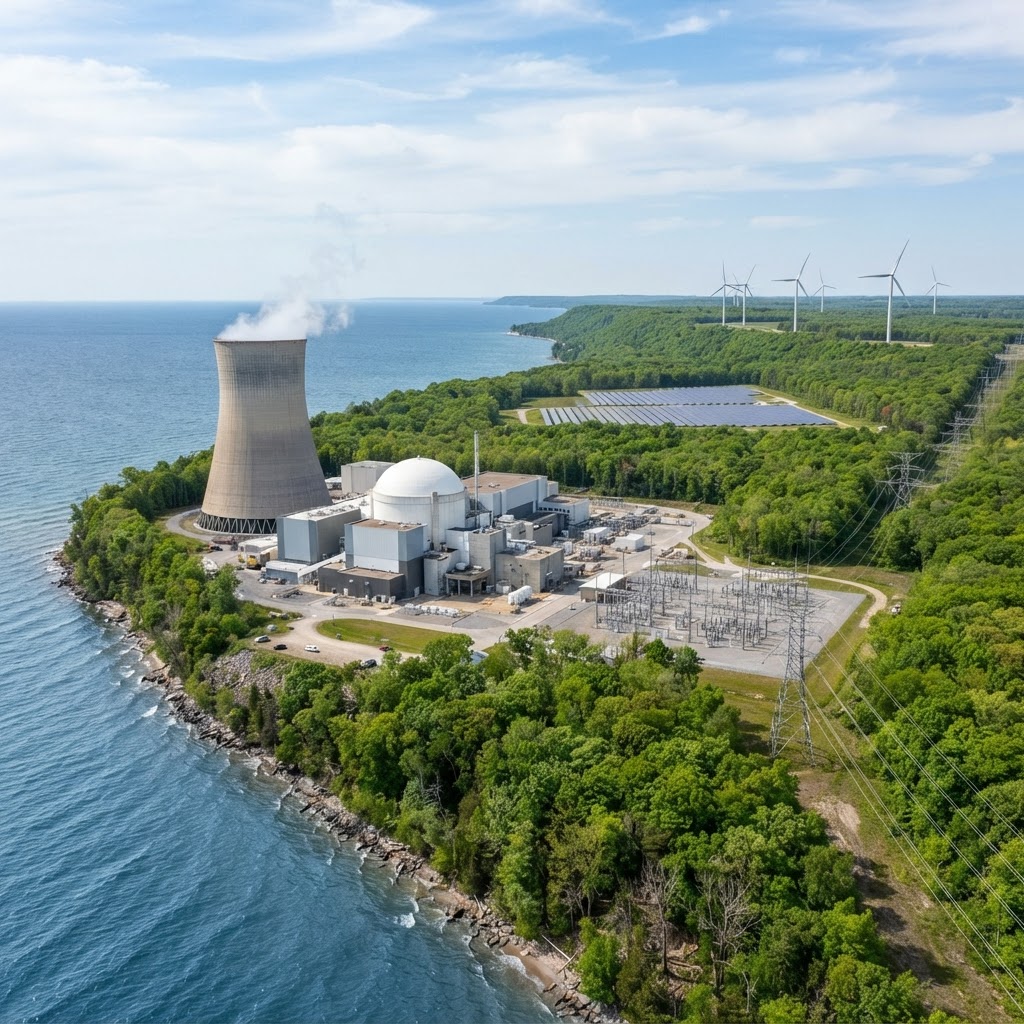
The U.S. Department of Energy’s Loan Programs Office has officially finalized a $1.52 billion loan guarantee to restart the Palisades Nuclear Generating Station in Covert Township, Michigan. This landmark transaction, executed with Holtec Palisades LLC, represents the first time a decommissioned nuclear reactor in the United States will be returned to operational status. The move signals a robust federal commitment to firm, carbon-free baseload power as a critical component of the national energy transition. By securing this financing, Holtec moves closer to restoring 800 megawatts of emissions-free capacity to the Midcontinent Independent System Operator grid, providing essential support for regional reliability and meeting the surging demand from industrial electrification.
Key Findings
The finalized loan serves as a cornerstone for Holtec’s ambitious multi-year restoration project, which aims to bring the facility back online by late 2025. Beyond the federal debt facility, the project has garnered significant regional support, including $300 million in grant funding from the State of Michigan. Analysts note that the revival of Palisades is economically significant, as it is projected to generate $363 million in annual regional economic impact and support over 600 high-paying jobs. Furthermore, the DOE's involvement underscores a strategic shift in U.S. energy policy, prioritizing the preservation of existing nuclear assets to complement intermittent wind and solar resources. The facility’s capacity is equivalent to preventing approximately 4.4 million tonnes of CO2 emissions annually. Investors are viewing this deal as a template for other potential reactor restarts across the country, particularly as tech giants seek massive quantities of reliable 24/7 power for data centers. The transaction also includes the participation of two regional cooperatives, Wolverine Power Supply Cooperative and Hoosier Energy, which have entered into long-term power purchase agreements for the plant’s entire output. This structured off-take agreement reduces market risk and demonstrates the strong demand for localized, reliable energy sources in the American Midwest.
Industry Response
Energy Secretary Jennifer Granholm emphasized that nuclear energy is the nation's largest source of carbon-free electricity, noting that the restart is a "vital tool" for achieving net-zero goals while strengthening energy security. Holtec International CEO Kris Singh lauded the federal partnership, stating that the project reflects a "new era of American nuclear energy leadership" and provides a repeatable model for facility life extension. Market analysts at BloombergNEF have highlighted that while restarting a shuttered plant involves significant regulatory and technical hurdles, the financial backing from the Loan Programs Office provides the necessary de-risking for private stakeholders. The Nuclear Energy Institute (NEI) praised the decision, suggesting it validates the crucial role of baseload nuclear in a decarbonized economy. However, some industry observers remain focused on the Nuclear Regulatory Commission’s (NRC) stringent oversight process, which remains the ultimate arbiter of the plant's safety and operational readiness. Environmental advocacy groups have largely remained supportive, citing the immediate carbon-reduction benefits compared to natural gas alternatives. The consensus among grid operators like MISO is that the return of Palisades will provide much-needed voltage support and inertia, stabilizing a regional grid that has faced increasing strain during extreme weather events and peak demand cycles.
What's Next
The focus now shifts to the technical and regulatory milestones required for commercial operation. Holtec must complete comprehensive inspections, refurbishments, and fuel procurement before the anticipated 2025 restart date. The Nuclear Regulatory Commission is currently conducting a rigorous environmental and safety review, which will include public hearings and technical assessments of the plant’s structural integrity. Simultaneously, Holtec is exploring the potential addition of two small modular reactors (SMRs) at the Palisades site, which could add another 600 megawatts of capacity in the future. This phased expansion would leverage the existing grid interconnection and infrastructure, further enhancing the site’s value proposition. Market watchers are also monitoring similar developments at the Three Mile Island Unit 1 facility, where Constellation Energy recently announced plans to restart operations to power Microsoft’s data centers. The success of the Palisades restart will likely determine the feasibility of these subsequent projects and influence future legislative support for the nuclear sector. As the U.S. updates its Integrated Resource Plans, the successful integration of revived nuclear assets will serve as a bellwether for the broader feasibility of reaching a 100% clean electricity grid by 2035. Stakeholders should expect quarterly progress reports on construction and staffing as the project enters its final commissioning phase.