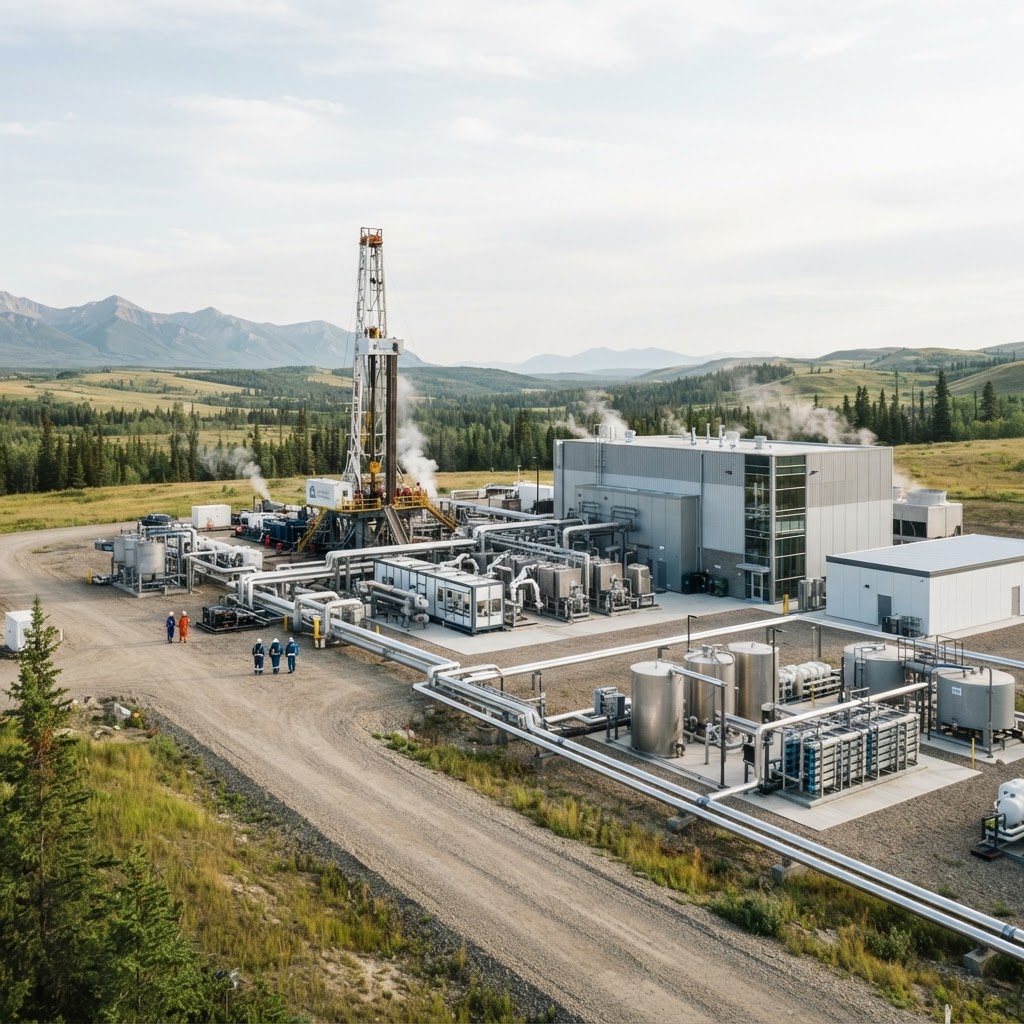
Lithium Harvest Holding A/S has signaled a major expansion in North American critical minerals, signing a letter of intent to develop an integrated geothermal power and lithium production facility in Alberta, Canada. By leveraging the province’s geothermal potential, the project aims to produce 28,500 tonnes of battery-grade lithium carbonate annually alongside 0.67 TWh of renewable electricity. This dual-output model represents a strategic shift toward resource efficiency, utilizing geothermal heat to power the extraction process. With first production targeted for 2028, the venture underscores the growing momentum for Canadian-based lithium supply chains, combining proprietary direct lithium extraction (DLE) technology with sustainable, low-carbon energy production to meet rising global demand for battery materials.
Key Findings
The proposed Alberta facility is designed as a two-phase development, integrating water treatment and DLE technology to process geothermal brine. A primary finding of the project’s design is the synergy between renewable power generation and mineral extraction; the geothermal heat serves as a critical utility for the refining process, potentially lowering the carbon footprint of the final lithium product. The project targets a nameplate capacity of 28,500 tonnes of lithium carbonate per year, a significant volume that would bolster North American supply security. By utilizing geothermal brine as a feedstock, the project avoids the high water consumption and land-use challenges associated with traditional evaporation ponds. Furthermore, the integration of power and mineral production provides a diversified revenue stream, enhancing the project's economic resilience against lithium price volatility. The technical roadmap focuses on scaling proprietary DLE platforms that have been refined through recent industry-wide advancements in ion-exchange efficiency and brine processing, ensuring that the facility can operate effectively within the specific geological conditions of the Alberta region.
Industry Response
The move by Lithium Harvest reflects a broader industry trend toward 'green' lithium production, where environmental compliance and energy efficiency are becoming as critical as extraction volume. Industry analysts note that the integration of geothermal energy is a sophisticated response to the high energy intensity of DLE processes. By securing a geothermal partner, Lithium Harvest is positioning itself to bypass the energy-related OpEx hurdles that have historically challenged DLE commercialization. This approach aligns with recent regulatory shifts in Canada, where provincial and federal support for critical minerals has accelerated project timelines. Market participants view the 2028 production target as an ambitious but achievable milestone, provided the joint venture can successfully navigate the permitting and infrastructure requirements of the Alberta energy sector. The industry has largely welcomed this development, viewing it as a validation of the 'hub-and-spoke' or integrated-site model that minimizes logistics costs and maximizes the utility of local geological assets. As global supply chains seek to diversify away from incumbent producers, projects that offer both renewable energy and mineral security are increasingly attracting interest from strategic investors and offtake partners looking for long-term, sustainable supply agreements.
What's Next
The immediate path forward for the Alberta project involves finalizing the joint venture structure and moving from the letter of intent to a definitive agreement. Following this, the partners are expected to initiate site-specific feasibility studies and environmental assessments required for regulatory approval. A key catalyst for the project will be the successful demonstration of the integrated DLE platform at a pilot scale, which will provide the necessary data to secure project financing and finalize offtake contracts. Investors will be watching for updates on the geothermal resource confirmation and the procurement of long-lead equipment for the extraction facility. By 2027, the project aims to reach a final investment decision (FID), which will be a critical milestone for the 2028 production timeline. Additionally, the company will likely focus on training local operations staff and establishing the necessary grid connections for the 0.67 TWh of renewable electricity. As the project progresses, it will serve as a bellwether for the viability of geothermal-lithium co-production in Canada, potentially unlocking further investment in the region's vast, untapped brine resources and reinforcing the country's role as a key player in the global energy transition.