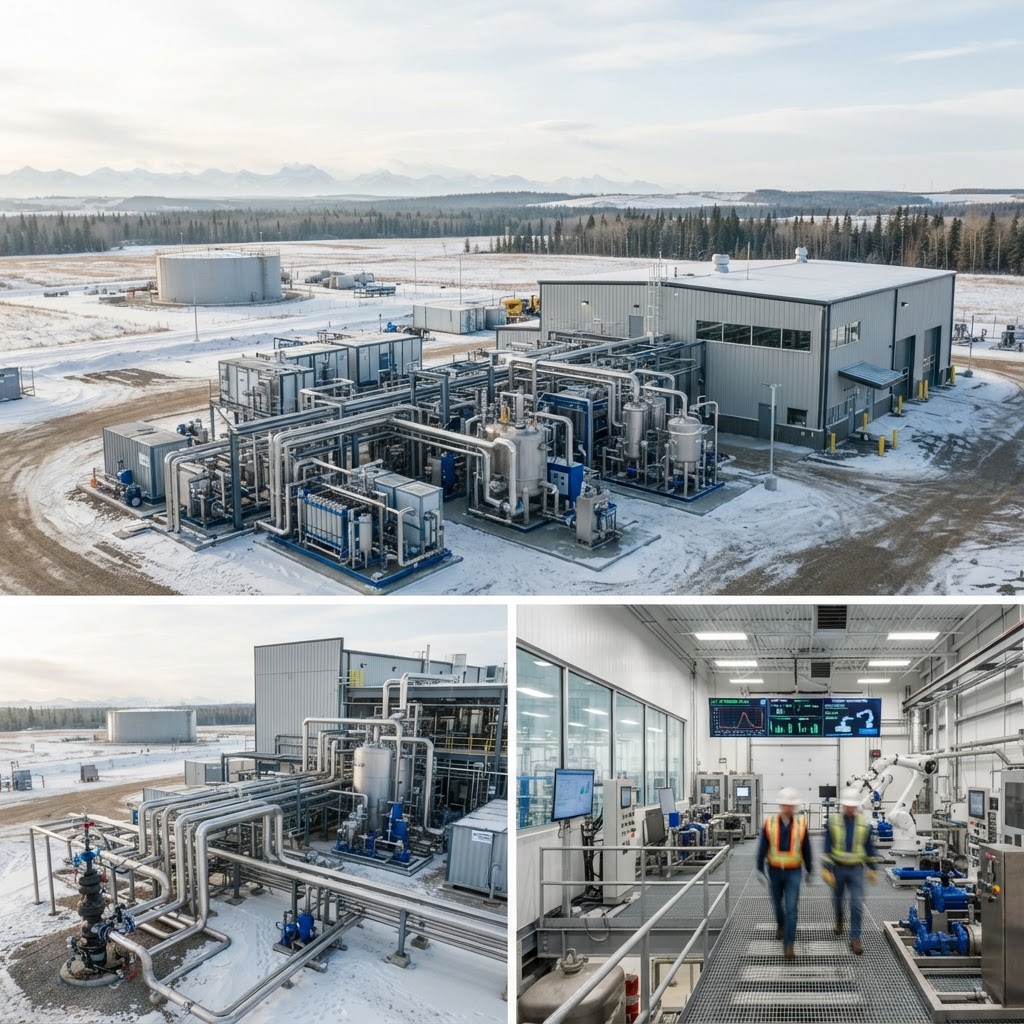
E3 Lithium Ltd. is nearing a pivotal transition from pilot-scale testing to commercial readiness at its Clearwater project in Alberta. The company announced it is approaching the completion of Phase 2 of its demonstration facility, a critical milestone designed to de-risk its proprietary direct lithium extraction (DLE) technology. By successfully operating a 30-column DLE system alongside a new commercial-scaled column, E3 is gathering the essential engineering data required to finalize the design of its first commercial production plant. This progress underscores a disciplined, methodical approach to project development, positioning the company to meet the growing demand for battery-grade lithium carbonate in the North American energy transition.
Key Findings
The Phase 2 completion provides the final technical data set necessary to finalize the design of a commercial facility capable of producing approximately 12,000 tonnes of battery-grade lithium carbonate per year. This initial stage represents the cornerstone of E3’s broader commercialization strategy. By utilizing a 30-column DLE system, the company has successfully demonstrated the ability to extract lithium at scale, effectively bridging the gap between laboratory concepts and industrial application. The project’s structured development path is specifically designed to reduce construction risk and protect capital, ensuring that the eventual commercial plant is built with high operational confidence. Furthermore, the Clearwater project benefits from its location in Alberta’s Bashaw District, which hosts one of the world’s largest lithium resources, providing a long-term foundation for potential production expansion beyond the initial 12,000-tonne target.
Industry Response
Industry observers and company leadership view the Clearwater progress as a significant validation of DLE technology’s viability in the Canadian market. Chris Doornbos, CEO and chair of E3 Lithium, emphasized that the company is building the project exactly as it intends to operate, focusing on de-risking the technology at a commercial scale. This strategy has garnered strong federal support and interest from international offtake partners, reflecting a broader industry trend where strategic partnerships are increasingly tied to proven technical milestones. Analysts note that E3’s ability to secure capital and advance permitting in parallel with technical operations is a positive signal for the sector. The company’s proactive engagement with stakeholders, including recent investor webinars and transparent reporting on engineering metrics, has helped maintain market confidence as the project moves closer to final investment decisions.
What's Next
With Phase 2 nearing completion, E3 Lithium is shifting its focus toward the next stages of the Clearwater project. The company is actively advancing permit applications for its processing facility while simultaneously engaging in ongoing discussions regarding project financing and long-term offtake agreements. A key catalyst for the coming months will be the transition into Phase 3, which involves ramping up lithium carbonate production and finalizing the front-end engineering design (FEED) for the commercial plant. Additionally, E3 continues to explore strategic partnerships, such as its existing teaming agreement with TKMS, to facilitate the conversion of lithium carbonate into battery-grade lithium hydroxide. These parallel workstreams—technical, commercial, and financial—are designed to converge, providing a clear pathway toward the construction of the commercial facility and the eventual delivery of lithium to the global battery supply chain.