Rio Tinto is accelerating its push into the battery materials sector, securing a $1.175 billion financing package to advance its Rincón lithium project in Argentina’s Salta province. The capital, provided by a consortium including the International Finance Corporation, IDB Invest, Export Finance Australia, and the Japan Bank for International Cooperation, underscores the strategic importance of the greenfield development. With a target capacity of 60,000 tonnes of battery-grade lithium carbonate annually, the project is a cornerstone of Rio Tinto’s strategy to triple its lithium production by 2028. As global demand for electric vehicle and energy storage materials intensifies, this investment marks a significant milestone in scaling high-quality, low-cost lithium supply.
Key Findings
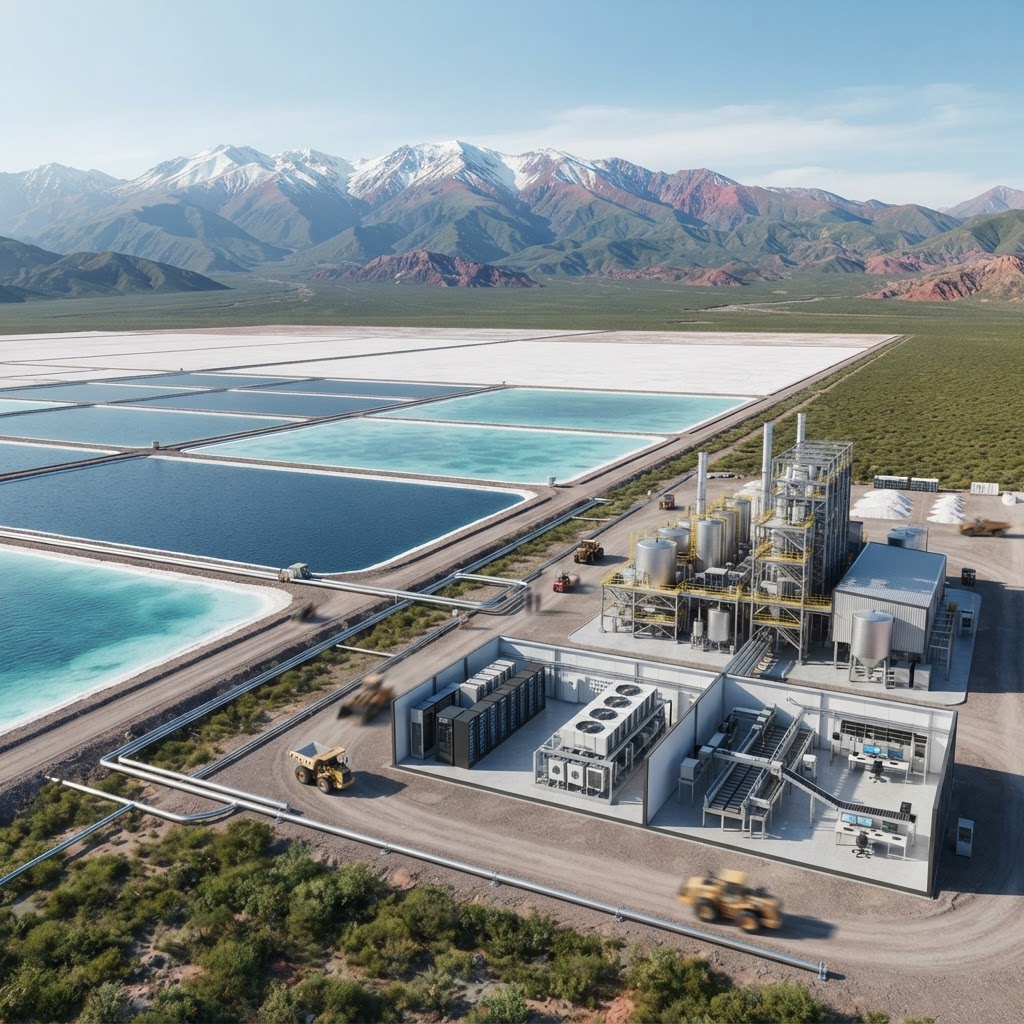
The Rincón project represents a $2.5 billion total investment, positioning it as a critical asset in Rio Tinto’s portfolio. The facility, located on the high-altitude Puna plateau, is designed to utilize advanced processing techniques to convert raw brine into battery-grade lithium carbonate. Construction is currently underway, with site infrastructure and camp expansions already completed. The project is expected to reach first production by 2028, contributing to the company's broader goal of reaching 200,000 tonnes of annual lithium capacity. By integrating extraction, processing, and local infrastructure, the operation aims to optimize efficiency and minimize the environmental footprint typical of traditional evaporation-heavy methods. The project’s scale and the backing of international development banks highlight the growing institutional confidence in Argentina’s capacity to serve as a reliable, long-term supplier of critical minerals for the global energy transition.
Industry Response
The financing package has been met with strong support from development institutions and industry analysts, who view the project as a catalyst for regional economic integration. The International Finance Corporation (IFC) emphasized that the partnership is designed to create jobs across the mineral value chain, from construction to local processing, thereby strengthening Argentina’s position in the global critical minerals sector. IDB Invest noted that the initiative will bolster local business activity in Salta and facilitate the integration of domestic suppliers into global value chains. Industry observers point to the involvement of multiple export credit agencies as a signal of the project's bankability and its alignment with international ESG standards. By securing long-term capital, Rio Tinto is effectively de-risking the project, providing a clear pathway for operational ramp-up while addressing the urgent need for diversified, high-quality lithium supply chains in the face of rising global demand.
What's Next
With the financing secured, the immediate focus shifts to the full-scale plant construction and the commissioning of processing infrastructure. Rio Tinto is working closely with lead integration delivery partners to coordinate technology deployment and subcontractor management. The company is also exploring advanced extraction technologies, such as the pilot deployment of ILiAD Technologies’ direct lithium extraction (DLE) at its Sal de Vida site, which could further optimize yield and production cycles. Investors are closely monitoring the 2028 production timeline, which serves as a key catalyst for the company’s growth targets. Future milestones include the completion of the main mine components, including the wellfield and brine distribution systems, and the successful transition from commissioning to steady-state operations. As the project matures, it is expected to play a pivotal role in stabilizing supply for the electric vehicle battery market, with ongoing updates on production ramp-up and operational efficiency expected in upcoming quarterly filings.