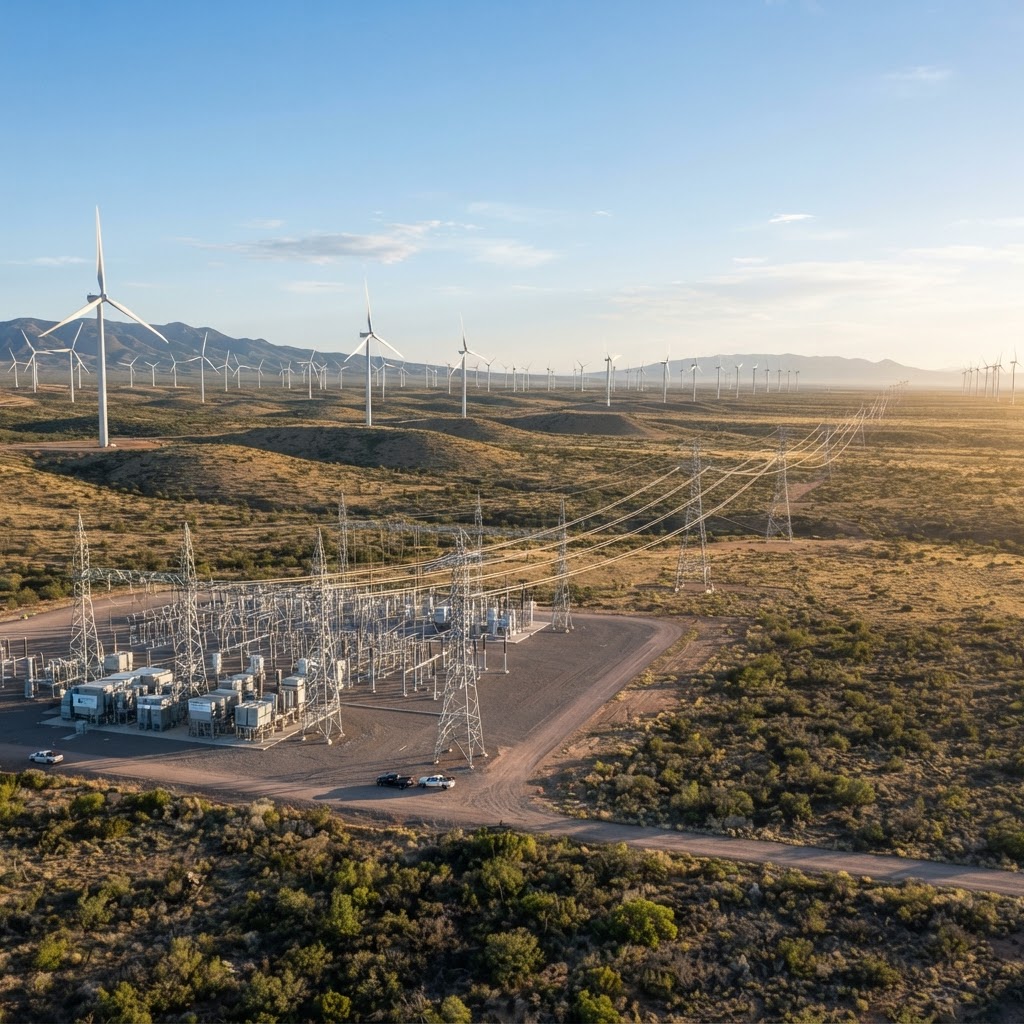
Pattern Energy has officially brought the SunZia project online, marking the completion of one of the largest clean energy infrastructure initiatives in U.S. history. The $11 billion project, which spans 550 miles of high-voltage direct current (HVDC) transmission infrastructure, connects wind resources in New Mexico to the broader Western power grid. By delivering 3,650 megawatts of renewable energy, the project addresses critical demand for reliable, affordable power across Arizona and California. This milestone represents a significant achievement in interregional grid connectivity, demonstrating the capacity to execute complex, large-scale energy projects that strengthen the resilience and decarbonization pathways of the Western United States.
Key Findings
The SunZia project stands as a cornerstone of modern grid modernization, utilizing a 550-mile ±525 kV HVDC bipole transmission line to move massive amounts of electricity efficiently. The infrastructure enables the integration of 3,650 MW of wind energy, providing a stable, clean power source for millions of homes. Beyond its technical capacity, the project is projected to generate approximately $20.5 billion in economic benefits for New Mexico and the surrounding region. Construction supported over 2,000 jobs at its peak, with more than 100 permanent positions now established for ongoing operations. By operating in an islanded, grid-forming mode, the system enhances the stability of the Desert Southwest’s power network, proving that long-distance transmission is a viable solution for balancing regional energy supply and demand.
Industry Response
Industry leaders and policymakers have lauded the project as a blueprint for future infrastructure development. Elliot Mainzer, President and CEO of the California Independent System Operator (CAISO), emphasized that large-scale transmission is essential to meeting the West’s growing energy needs and strengthening grid reliability. Pattern Energy CEO Hunter Armistead noted that the successful commissioning proves the industry can still build the consequential infrastructure the country requires. Furthermore, the Salt River Project (SRP) has already moved to secure 600 MW of this wind capacity, integrating it into a diverse portfolio that includes hydro, solar, and battery storage. This move by a major public power utility underscores the market confidence in SunZia’s ability to provide firm, reliable, and cost-effective energy to meet surging regional demand.
What's Next
With the project now fully operational, the focus shifts to optimizing the integration of SunZia’s power into the Western Interconnection. The project’s status as one of the first to utilize the Subscriber Participating Transmission Owner (SPTO) model, approved by FERC, sets a precedent for future private-public transmission financing. Stakeholders are now monitoring the performance of the 2,100 MW allocation designated for the CAISO market, which will be a key indicator of how interregional transmission can mitigate price volatility. Future efforts will likely center on expanding similar HVDC corridors to accommodate additional renewable capacity. As the grid continues to evolve, the SunZia model provides a scalable framework for developers and utilities to replicate, ensuring that the next generation of clean energy projects can successfully navigate the complexities of long-distance power delivery.