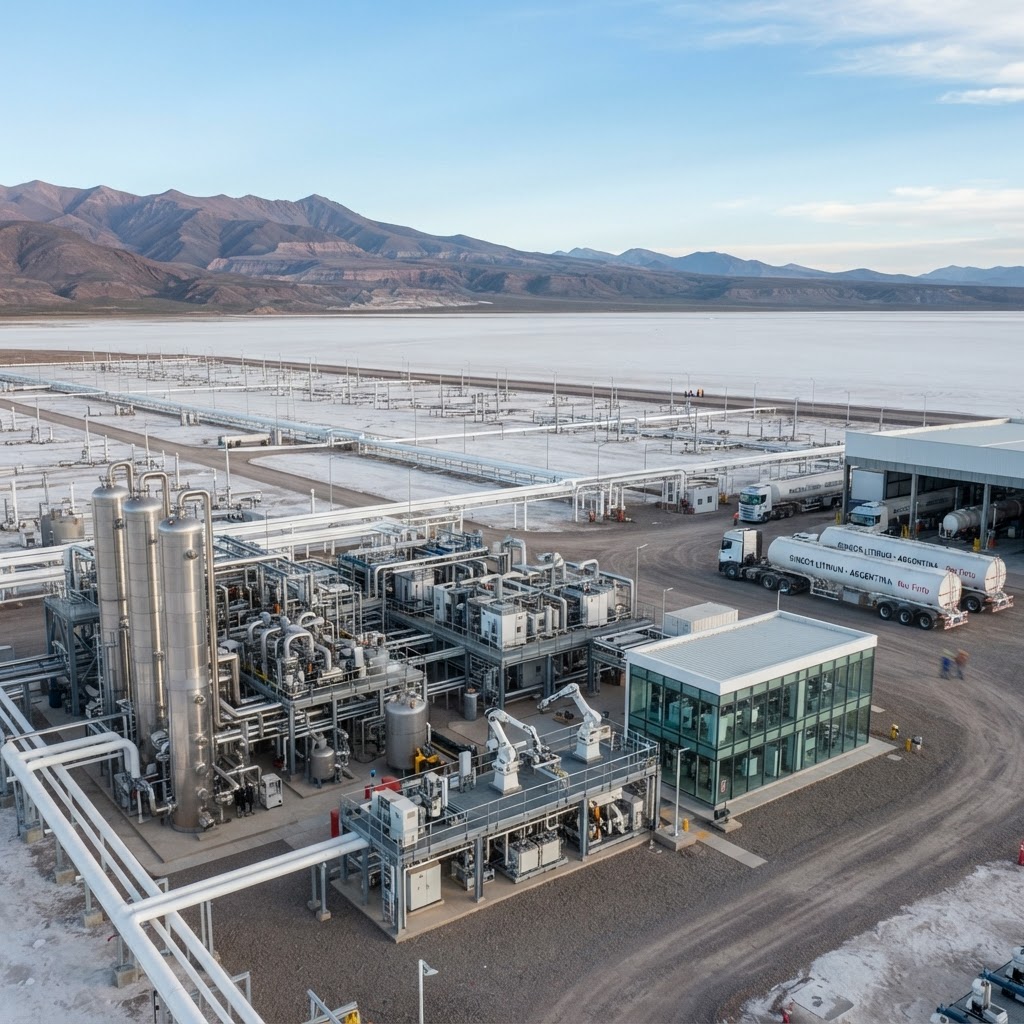
Global mining giant Rio Tinto has secured a $1.175 billion project financing package to accelerate its Rincon direct lithium extraction development in Salta, Argentina, marking a major milestone for commercial-scale chemical processing in the Lithium Triangle. The capital injection coincides with the maiden commercial export of 200 metric tons of battery-grade lithium carbonate from Rincon's 3,000-metric-ton starter facility, en route to processing hubs in Asia. Backed by multilateral lenders, the funding supports Rio Tinto’s broader $2.5 billion capital expenditure program to expand the asset to 60,000 metric tons per annum, validating industrial direct lithium extraction economics.
Key Findings
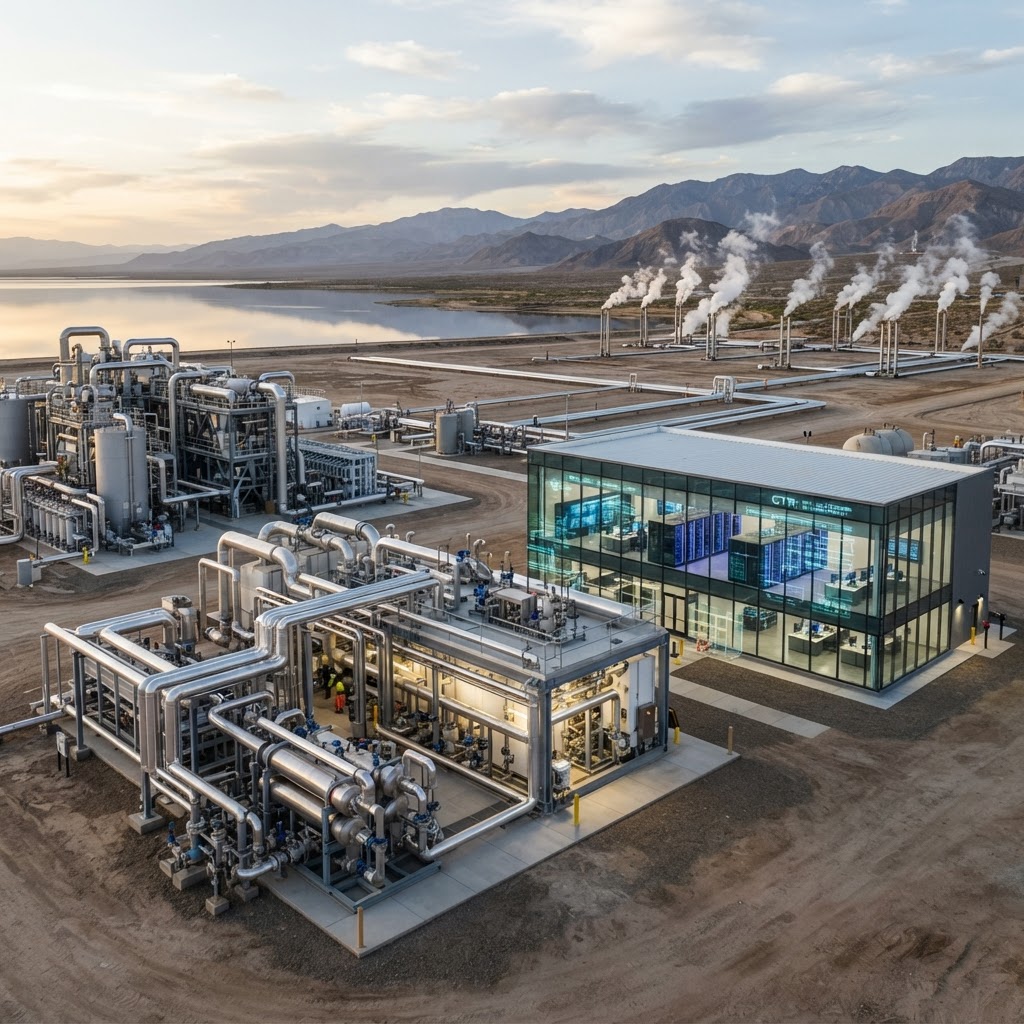
Rio Tinto's industrial deployment of selective adsorption direct lithium extraction (DLE) technology at Rincon eliminates traditional solar evaporation ponds, compressing recovery cycles from eighteen months to mere hours while doubling resource yield. According to company technical filings, Rincon's closed-loop adsorption circuits attain between 80% and 90% lithium recovery from raw brine, compared to roughly 50% for legacy evaporative basins, while halving process water consumption.
The project comprises a 3,000-tonne-per-year starter plant and an adjacent 57,000-tonne commercial expansion facility, targeted to achieve first production in 2028 before a three-year ramp to full capacity. The $1.175 billion non-recourse debt tranche brings participation from prominent institutional development financiers, including the International Finance Corporation (IFC), IDB Invest, Export Finance Australia, and the Japan Bank for International Cooperation (JBIC).
Financially, Rio Tinto projects long-term C1 cash operating costs between $5 and $8 per kilogram across its South American brine portfolio, maintaining an average capital intensity of roughly $65 per kilogram. By scaling Rincon alongside integration assets from its Arcadium portfolio, Rio Tinto aims to reach 200,000 metric tons of lithium carbonate equivalent per year by 2028, sustaining target operating margins near 50% across market cycles.
Industry Response
Institutional financiers and technical analysts view the successful debt syndication as critical validation of DLE technology at commercial scale, particularly given rigorous multilateral environmental underwriting standards. Jérôme Pécresse, Chief Executive for Aluminium and Lithium at Rio Tinto, underscored the structural role of the financing package, noting that the international backing broadens long-term capital sources and strengthens execution across the company's energy-transition pipeline.
Energy commodity analysts note that multilateral involvement from IFC and JBIC provides an important template for de-risking advanced extractive technologies across South America. Equity analysts tracking battery materials highlighted that direct extraction circumvents the protracted weather dependencies and vast land surface footprints that have historically constrained regional brine developments. Furthermore, provincial regulators in Salta welcomed the operational ramp, citing compliance with Argentina's incentive regimes for major capital projects and strict closed-loop water preservation frameworks.
What's Next
Execution now shifts to major mechanical and civil construction across the 57,000-tonne commercial expansion trains at Rincon. Rio Tinto plans an annual lithium capital outlay of approximately $1 billion over the next three years to advance Argentine operations and Canadian refining infrastructure in tandem.
Key operational milestones through 2026 include the commissioning of high-volume adsorption columns, delivery of industrial reinjection infrastructure to return spent brine to deep salar aquifers, and grid interconnection with provincial renewable supply lines. First commercial output from the expanded Rincon facility remains scheduled for early 2028, initiating a three-year ramp-up to reach nameplate capacity across its estimated 40-year mine life. Commercial teams will monitor off-spec product conversion, while downstream automotive supply contracts tied to battery-grade lithium carbonate and hydroxide conversion lines are expected to advance throughout mid-2026.