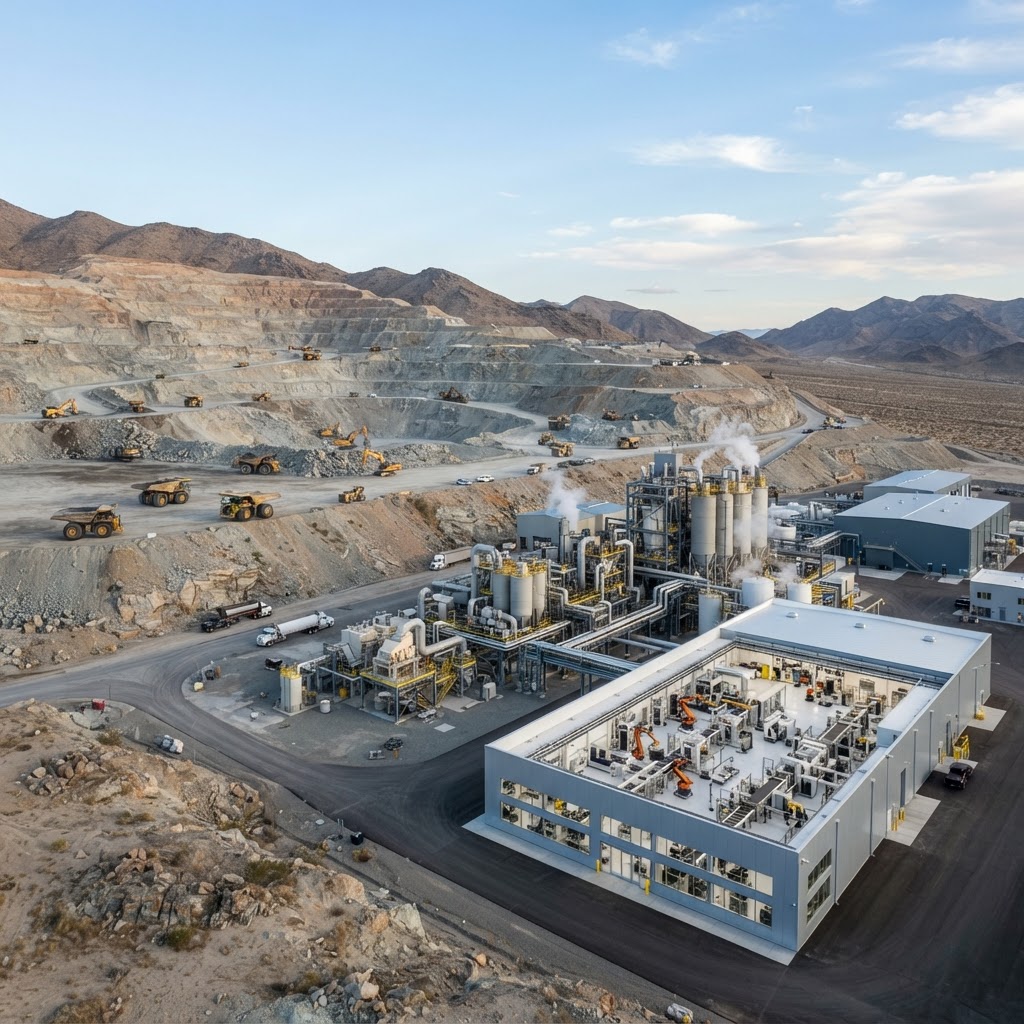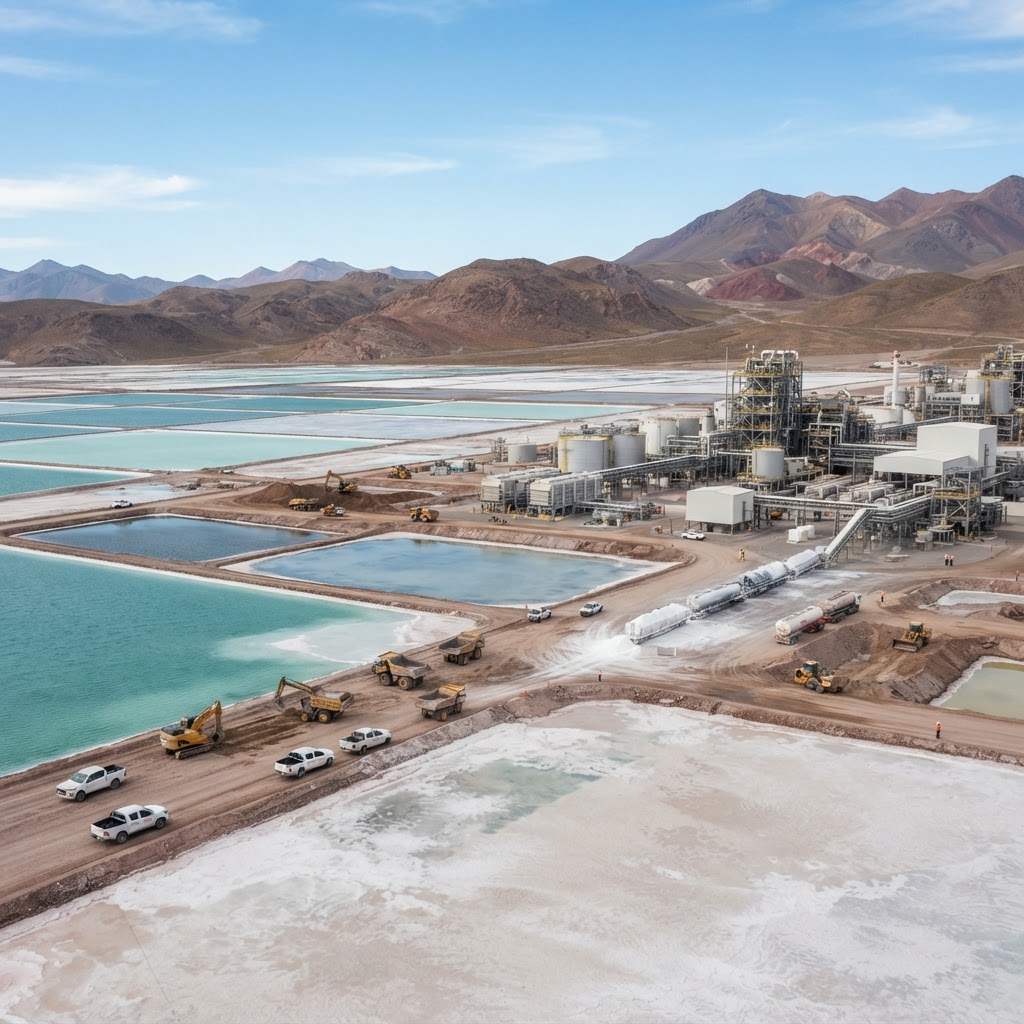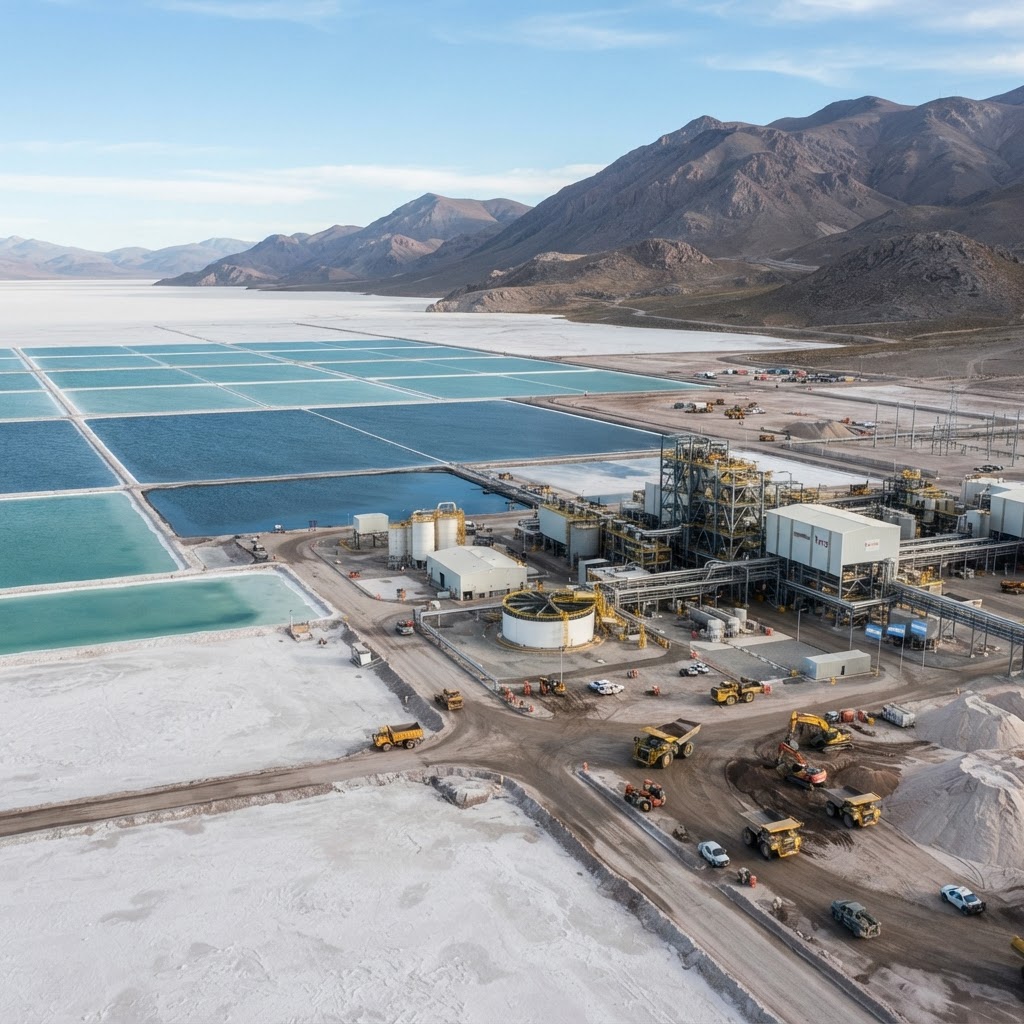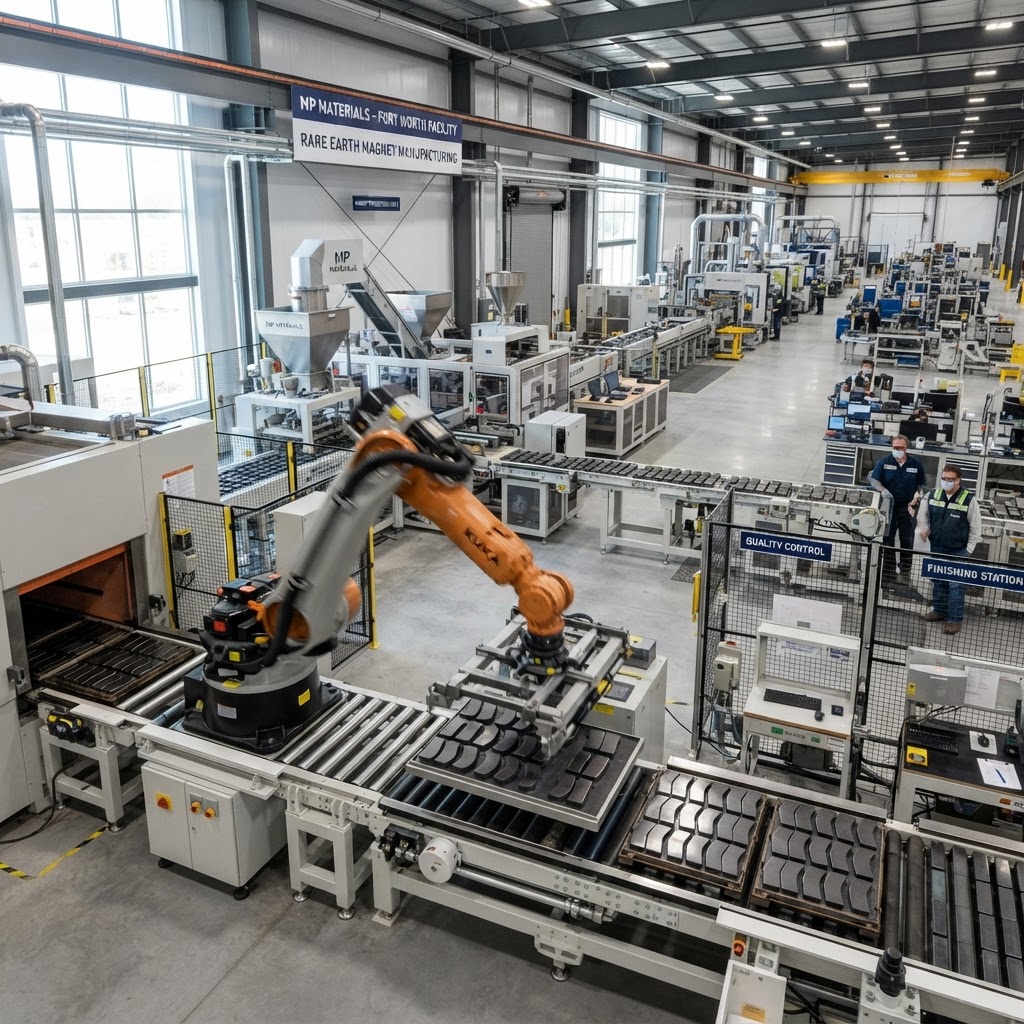
MP Materials Corp. has officially commenced commercial production of sintered neodymium-iron-boron (NdFeB) magnets at its Fort Worth, Texas facility, marking a historic shift in the Western critical minerals landscape. This milestone completes the company’s ambitious "Stage 3" strategy, transforming it from a raw ore concentrate exporter into a fully integrated domestic manufacturer of high-performance permanent magnets. By utilizing feedstock from its Mountain Pass mine in California, MP Materials is successfully closing the loop on a rare earth supply chain that has been dominated by China for decades. The activation of this facility provides a blueprint for resource security, offering North American automakers a resilient, traceable, and low-carbon source for essential electric vehicle drivetrain components.
Key Findings
The Fort Worth facility is engineered to produce approximately 1,000 tonnes of NdFeB magnets annually, a volume sufficient to power roughly 500,000 electric vehicle traction motors. Unlike traditional processing, MP Materials integrates the entire value chain: mining and flotation at Mountain Pass, separation into high-purity oxides, and now, metal alloy fabrication and magnet sintering in Texas. This integration significantly mitigates the price volatility typically associated with rare earth oxides, as the company captures value across the entire margin stack.\n\nFinancially, the commencement of Stage 3 is expected to provide a substantial tailwind to EBITDA margins as the company transitions from selling commodity concentrates to specialized, high-value engineered products. The facility leverages advanced automation and proprietary recycling technologies to minimize waste, ensuring that scrap material from the magnet-making process is fed back into the production cycle. Furthermore, the company has secured a long-term supply agreement with General Motors, which will utilize these magnets in its Ultium platform. This vertical integration not only enhances domestic industrial capacity but also establishes a reliable price ceiling for strategic partners, shielding them from geopolitical disruptions and ensuring long-term project bankability across the North American automotive sector.
Industry Response
The commissioning of the Fort Worth site has been met with significant optimism from both the public and private sectors. General Motors, a foundational partner in the project, has emphasized that the domestic sourcing of magnets is critical to scaling its EV production targets while meeting stringent content requirements for federal tax credits under the Inflation Reduction Act. Executive leadership at MP Materials, including CEO James Litinsky, has characterized the plant as a "cornerstone of the new American industrial base," highlighting the speed at which the project moved from groundbreaking to active production.\n\nMarket analysts at major financial institutions, including Goldman Sachs and Morgan Stanley, have noted that this development provides a "proof-of-concept" for Western midstream rare earth processing. The ability to successfully produce sintered magnets—a process requiring precise metallurgical control—demonstrates that the technical hurdles of decoupling from East Asian supply chains are surmountable with sufficient capital and strategic off-take agreements. Furthermore, the U.S. Department of Defense, which previously awarded MP Materials $35 million to support heavy rare earth processing, views this facility as a vital component of national security, ensuring that defense contractors have access to localized materials for guidance systems and high-tech weaponry without relying on adversarial jurisdictions.
What's Next
Looking forward, MP Materials is positioned to scale its Texas operations to meet rising demand. The company has already hinted at the potential for modular expansion at the Fort Worth site, which could double capacity if market conditions and automotive off-take volumes continue their current trajectory. Over the next twelve months, the primary operational focus will shift toward optimizing the alloy-to-magnet yields and qualifying specialized magnet grades for a broader range of industrial and aerospace applications.\n\nConcurrent with the magnet ramp-up, the company is advancing its heavy rare earth separation capabilities at Mountain Pass. By 2026, the integration of dysprosium and terbium into the production stream will allow for the manufacture of even higher-performance magnets that can withstand extreme temperatures, further broadening the addressable market. Investors should also watch for additional off-take announcements, as other Tier-1 OEMs seek to replicate the GM model to de-risk their supply chains. The success of this facility likely paves the way for a second wave of domestic refining investment, as policymakers utilize the Fort Worth example to justify further grants and production tax credits aimed at securing the mid-to-downstream segments of the energy transition.