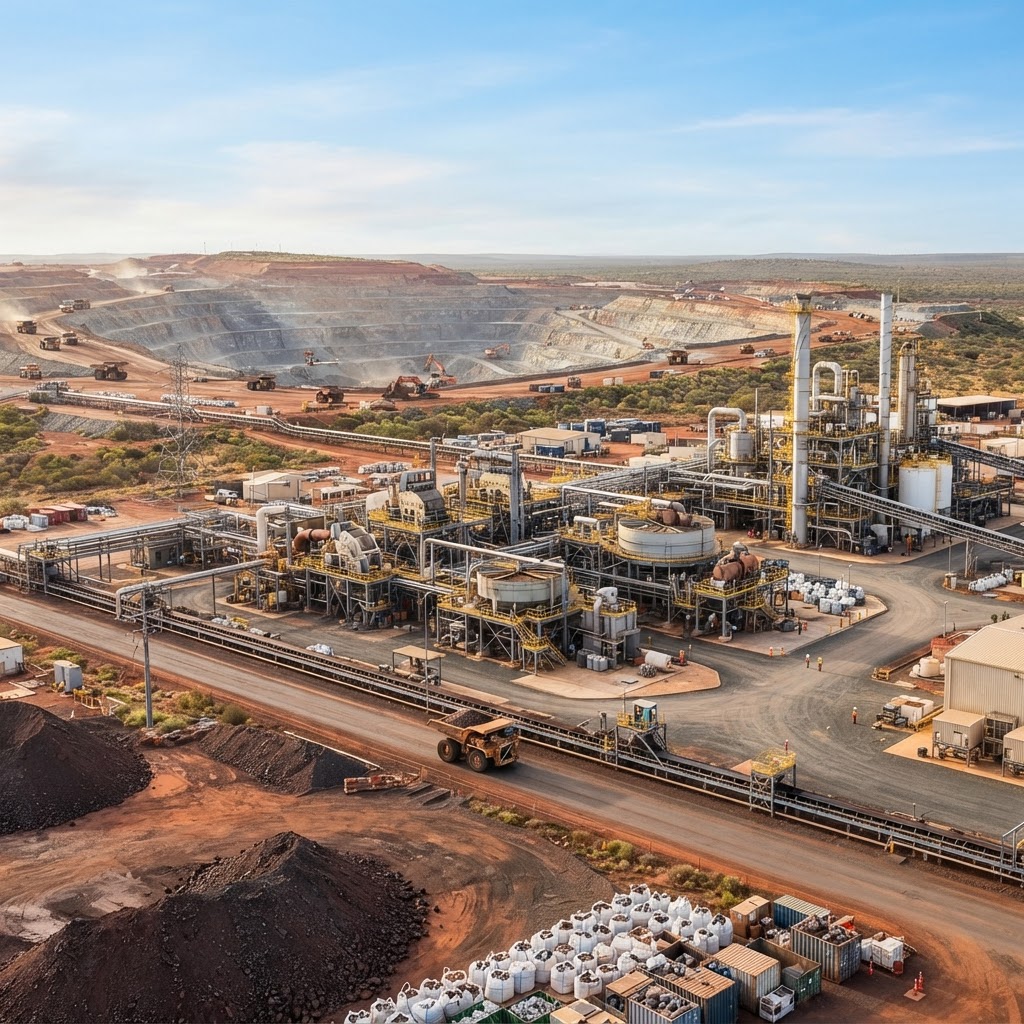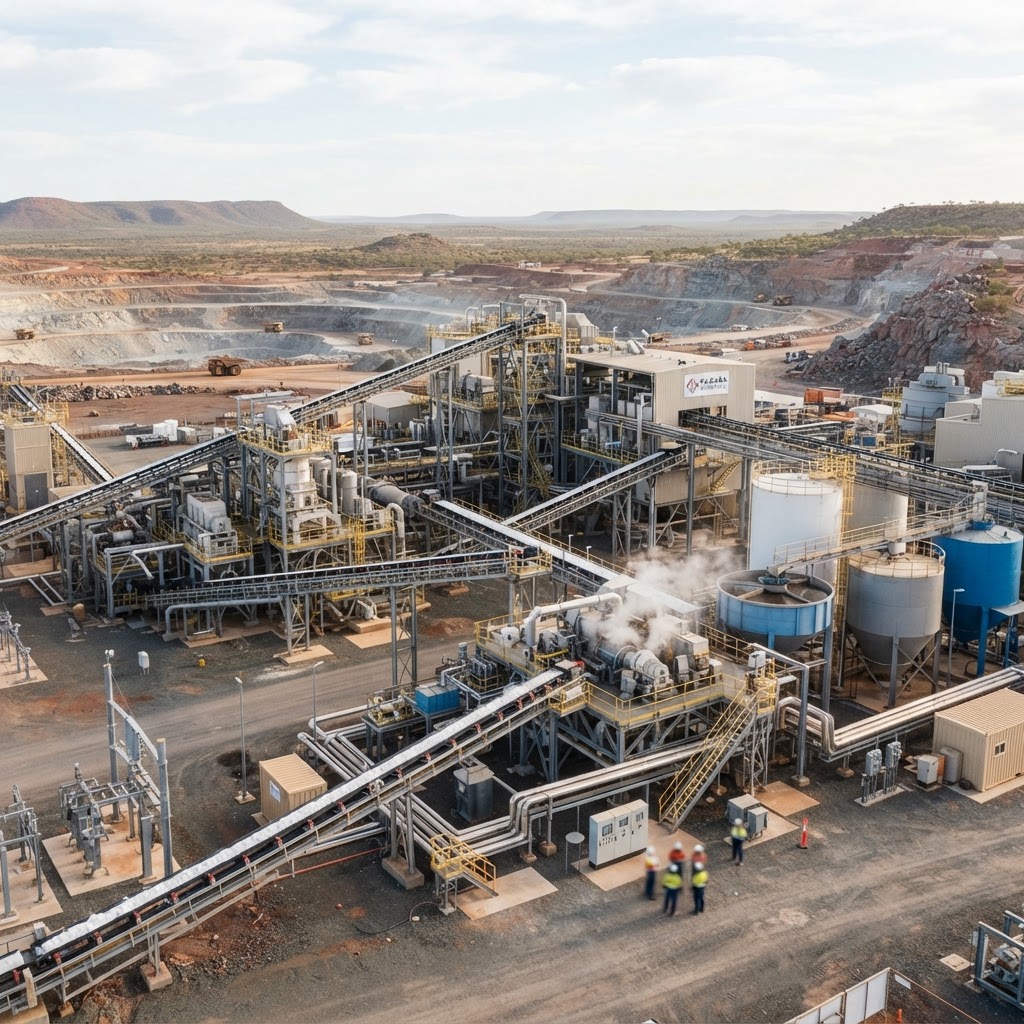
Pilbara Minerals has officially commissioned Australia’s first mine-site lithium midstream processing facility at its flagship Pilgangoora operation in Western Australia. This milestone marks a significant pivot for the nation’s critical minerals sector, moving beyond raw ore extraction toward high-value chemical production. The facility utilizes a proprietary refining process to convert spodumene concentrate into lithium phosphate, a technical-grade intermediate material essential for lithium-ion battery manufacturing. By integrating midstream processing directly at the source, the company aims to reduce transport volumes and carbon intensity while capturing a larger share of the battery value chain. This development aligns with broader national efforts to establish Australia as a renewable energy superpower through domestic downstream processing.
Key Findings
The commissioning of the Pilgangoora midstream plant represents a structural shift in the global lithium supply chain. Traditionally, Australian miners have exported spodumene concentrate to offshore refineries, primarily in China, for conversion into battery-grade chemicals. The new facility demonstrates the commercial viability of producing lithium phosphate—a product with higher lithium density and lower weight than concentrate—directly at the mine site. According to industry data, this approach can reduce the volume of material shipped by up to 80%, significantly lowering logistics costs and the associated carbon footprint of global trade.
Furthermore, the project addresses a critical bottleneck identified by the International Energy Agency (IEA), which notes that while mining capacity is expanding rapidly, refining and downstream manufacturing remain geographically concentrated. The Pilgangoora facility serves as a blueprint for "value-add" mining, where technological innovation allows producers to bypass traditional smelting or high-energy refining steps. The plant’s success is expected to improve project economics by diversifying revenue streams and providing a more stable, high-purity feedstock for cathode manufacturers. This move is particularly timely as global automakers seek more resilient and transparent supply chains that meet increasingly stringent environmental and social governance (ESG) standards in the United States and European Union.
Industry Response
Industry leaders and analysts have hailed the move as a necessary evolution for the Australian mining sector. Dale Henderson, Managing Director of Pilbara Minerals, emphasized that the demand for resilient supply chains is the primary driver behind this midstream expansion. He noted that the facility allows the company to capitalize on the "huge opportunity" presented by the build-out of midstream and downstream processing outside of dominant market players. This sentiment is echoed by broader industry analysts who suggest that mine-site processing is the most effective way to mitigate the volatility of raw material prices while securing long-term supply agreements with battery producers.
Government officials have also signaled strong support, viewing the project as a cornerstone of the Future Made in Australia initiative. By proving that complex chemical processing can be performed efficiently in high-cost jurisdictions through automation and proprietary technology, Pilbara Minerals is setting a precedent for other domestic producers. Analysts from Fastmarkets suggest that this midstream shift provides a "tailwind" to the lithium market, offering a pathway for Western producers to compete on quality and sustainability rather than just volume. The industry response indicates a growing consensus that the next phase of the energy transition will be defined by technical sophistication and the ability to deliver refined products directly to end-users.
What's Next
Looking ahead, the success of the Pilgangoora midstream plant is expected to trigger a wave of similar investments across the Tier 1 mining jurisdictions of Western Australia and Canada. The next major milestone for Pilbara Minerals will be the ramp-up to full commercial production levels, which will provide the data necessary to evaluate the long-term cost-competitiveness of lithium phosphate versus traditional carbonate or hydroxide pathways. Investors will be closely watching the company’s ability to secure off-take agreements specifically for this intermediate product, which could redefine how lithium is traded on global exchanges.
On a broader scale, the IEA forecasts that by 2035, the gap between mined supply and refining capacity must be closed to ensure market stability. The development of midstream hubs is a critical component of this transition. We expect to see increased collaboration between miners and technology providers to refine "direct-to-chemical" processes that eliminate the need for intermediate shipping. Additionally, the Australian government is likely to introduce further fiscal incentives to support the scaling of these technologies. As the industry moves toward 2027, the focus will shift from simple resource extraction to the integration of renewable energy into the refining process, further enhancing the "green" credentials of Australian-produced lithium.