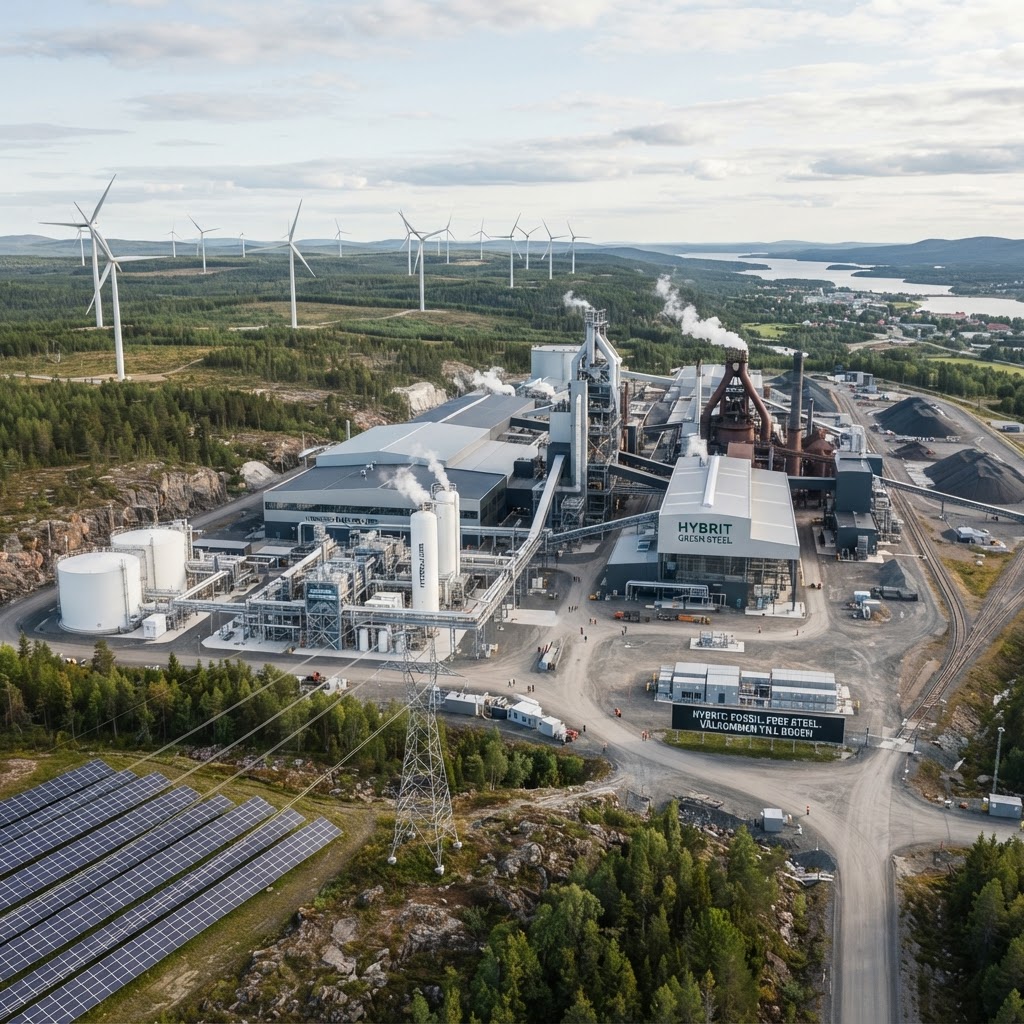
Stegra, the Swedish industrial startup formerly known as H2 Green Steel, has secured a critical $1.7 billion (€1.4 billion) financing round to finalize construction of the world’s first large-scale green steel plant. Led by the influential Wallenberg family, this capital injection provides a vital lifeline for the Boden-based facility as it navigates the capital-intensive transition to hydrogen-based manufacturing. The project represents a cornerstone of European industrial policy, aiming to replace traditional coal-fired blast furnaces with green hydrogen electrolyzers. For investors, the successful raise signals continued confidence in hard-to-abate sector decarbonization despite broader macroeconomic headwinds and the technical challenges of scaling renewable hydrogen infrastructure across the continent.
Key Findings
The new funding brings Stegra’s total capital stack to approximately €6.5 billion, combining senior debt, junior debt, and equity. The facility in Boden is designed to produce 2.5 million tonnes of "near-zero" steel annually in its initial phase, with plans to scale to 5 million tonnes by 2030. By utilizing green hydrogen produced on-site via a massive 1.5 GW electrolyzer, the plant aims to reduce carbon dioxide emissions by up to 95% compared to conventional steelmaking processes. A significant portion of the project’s operational stability is underpinned by a 14 TWh long-term agreement for renewable electricity, ensuring a consistent supply of fossil-free power. Furthermore, Stegra has already pre-sold approximately 60% of its initial volumes through binding five- to seven-year contracts with customers in the automotive, white goods, and construction sectors. This commercial traction was a decisive factor for the Wallenberg family’s investment arm, which stepped in to anchor the round. The financing also includes a €250 million grant from the EU Innovation Fund, highlighting the strategic importance of the project to the European Union’s broader climate targets and its ambition to lead the global market in low-carbon industrial materials.
Industry Response
Analysts view the Stegra financing as a landmark moment for the European green hydrogen economy, particularly as other regional projects face delays or cancellations due to rising interest rates and supply chain volatility. The Wallenberg family’s participation is seen as a powerful endorsement of the project’s technical and economic viability. Industry experts note that the successful raise demonstrates a "new playbook" for industrial decarbonization: securing massive upfront capital through a mix of private equity, public grants, and long-term off-take agreements. According to reports from the International Energy Agency (IEA), developers with diverse generation portfolios are increasingly prioritizing projects that offer clear pathways to firm, low-carbon output. Stegra’s ability to secure 14 TWh of renewable power suggests that integrated energy-industrial models are becoming the preferred structure for large-scale decarbonization. Trade groups have praised the move, suggesting that the Boden plant will serve as a blueprint for other hard-to-abate sectors like cement and chemicals. However, some market observers caution that the project’s success remains contingent on the timely commissioning of the electrolyzer fleet and the continued stability of European energy prices. Nevertheless, the prevailing sentiment among institutional investors is one of constructive optimism regarding Stegra’s role in securing Europe’s industrial future.
What's Next
With the $1.7 billion financing secured, Stegra is now positioned to complete the final stages of construction and equipment installation at the Boden site. The primary focus for the remainder of 2026 will be the commissioning of the hydrogen production units and the integration of the direct reduced iron (DRI) plant. Commercial production is expected to commence shortly thereafter, marking the first time hydrogen-based steel is produced at this scale globally. Investors will be closely watching the ramp-up phase to see if the facility can meet its ambitious 95% emission reduction targets while maintaining cost competitiveness with traditional steel. The company also plans to leverage its "Stegra Academy" to train the specialized workforce required to operate the high-tech facility, addressing a critical bottleneck in the green transition. Looking further ahead, the success of the Boden plant could trigger a wave of similar investments across the "Nordic Hydrogen Corridor," where abundant renewable energy and existing industrial infrastructure provide a competitive advantage. Future milestones include the potential expansion to 5 million tonnes of capacity and the exploration of secondary markets for excess green hydrogen. As the project moves from construction to operation, it will serve as a real-world test case for the viability of the European Green Deal’s industrial pillars.