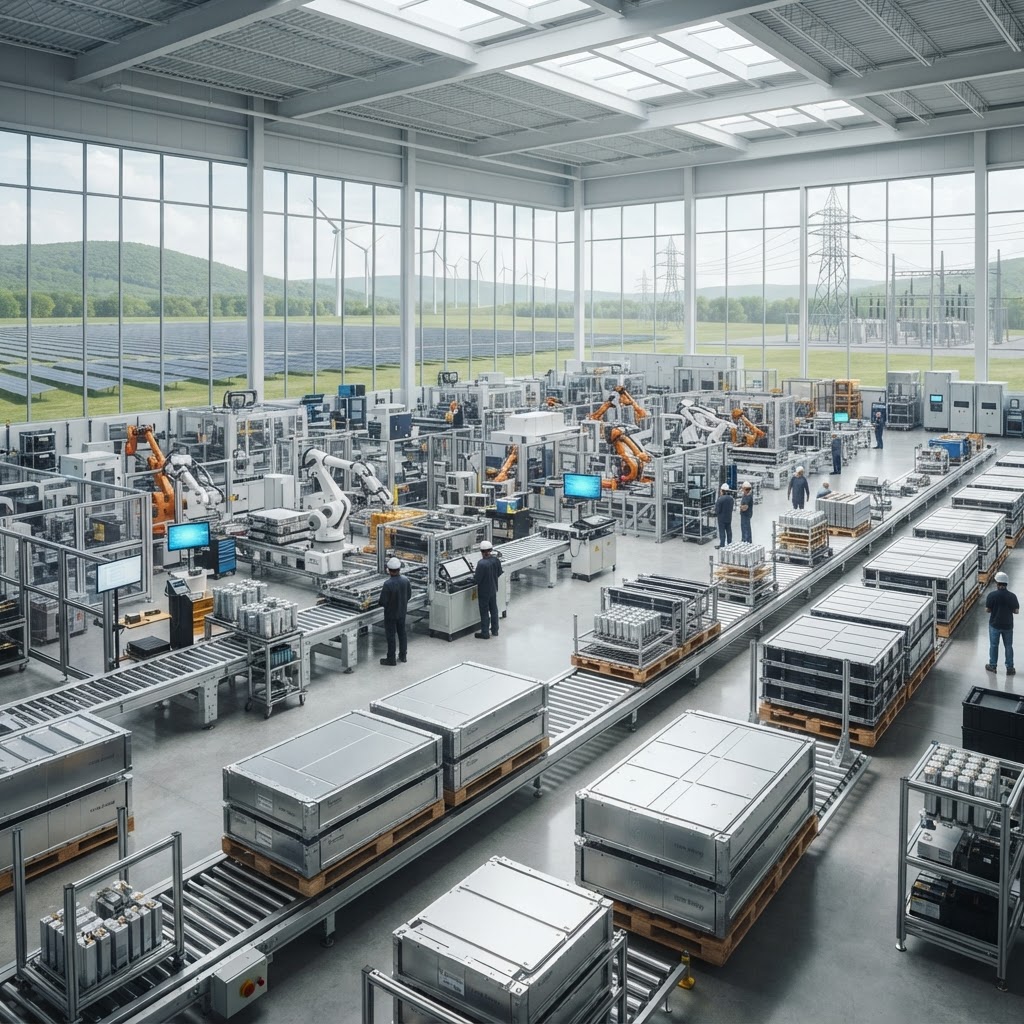
Form Energy has secured $750 million in new equity financing to accelerate the expansion of its high-volume manufacturing facility in Weirton, West Virginia. This capital infusion marks a significant milestone for the Somerville-based company as it ramps up production of its proprietary iron-air battery systems. Designed to provide 100 hours of cost-effective energy storage, the technology is increasingly viewed as a critical solution for grid reliability. With over 75 gigawatt-hours of projects now under agreement, Form Energy is positioning itself to meet the explosive power demands of the artificial intelligence sector, which requires consistent, long-duration energy to support massive data center infrastructure across the United States.
Key Findings
The recent funding round underscores the growing market confidence in non-lithium storage solutions. Form Energy’s iron-air technology utilizes abundant, low-cost materials—iron, air, and water—to achieve a target price point of $20 per kilowatt-hour, a figure that makes it highly competitive against legacy fossil fuel peaker plants. The company’s Weirton facility, which received support from the U.S. Department of Energy, is central to this strategy, with plans to reach an annual production capacity of 20 gigawatt-hours by 2027. By focusing on multi-day storage, Form Energy addresses the intermittency challenges inherent in renewable energy integration, providing a necessary buffer for grids increasingly strained by the 25% annual growth in data center electricity consumption. This shift toward alternative chemistries is vital as supply chains for traditional lithium-ion batteries face tightening constraints and geopolitical complexities.
Industry Response
The industry has responded with strong validation of the iron-air value proposition. Major offtakers, including Crusoe, have entered into significant agreements for 12 gigawatt-hours of storage, signaling that large-scale industrial users are prioritizing firm, reliable power to mitigate the risks of grid volatility. Analysts at Wood Mackenzie have identified the deployment of storage for industrial loads as a fundamental transformation in the energy sector, noting that alternative chemistries are gaining traction as a hedge against lithium supply chain bottlenecks. Furthermore, the collaboration with GE Vernova and the ongoing support from federal manufacturing programs highlight a broader policy alignment. Policymakers and energy experts emphasize that such long-duration storage is essential for the '50 by 50' energy goals, as it allows for the decommissioning of coal assets while maintaining the baseload reliability required by modern digital infrastructure.
What's Next
The immediate focus for Form Energy is the full-scale commissioning of its pilot systems and the continued expansion of the Weirton factory. With the new capital, the company is expected to accelerate hiring and training initiatives, further solidifying its role in the regional industrial revitalization of West Virginia. Investors and grid operators will be closely monitoring the 2026 project timelines, particularly the delivery of large-scale deployments that are expected to come online throughout the year. As the company scales, the next major catalyst will be the successful integration of these systems into regional transmission organizations, proving that iron-air batteries can effectively manage peak demand and curtailment issues. Long-term, the company’s ability to maintain its cost-advantage while scaling production will determine its market share in a global storage landscape projected to reach record-breaking installation levels by the end of the decade.