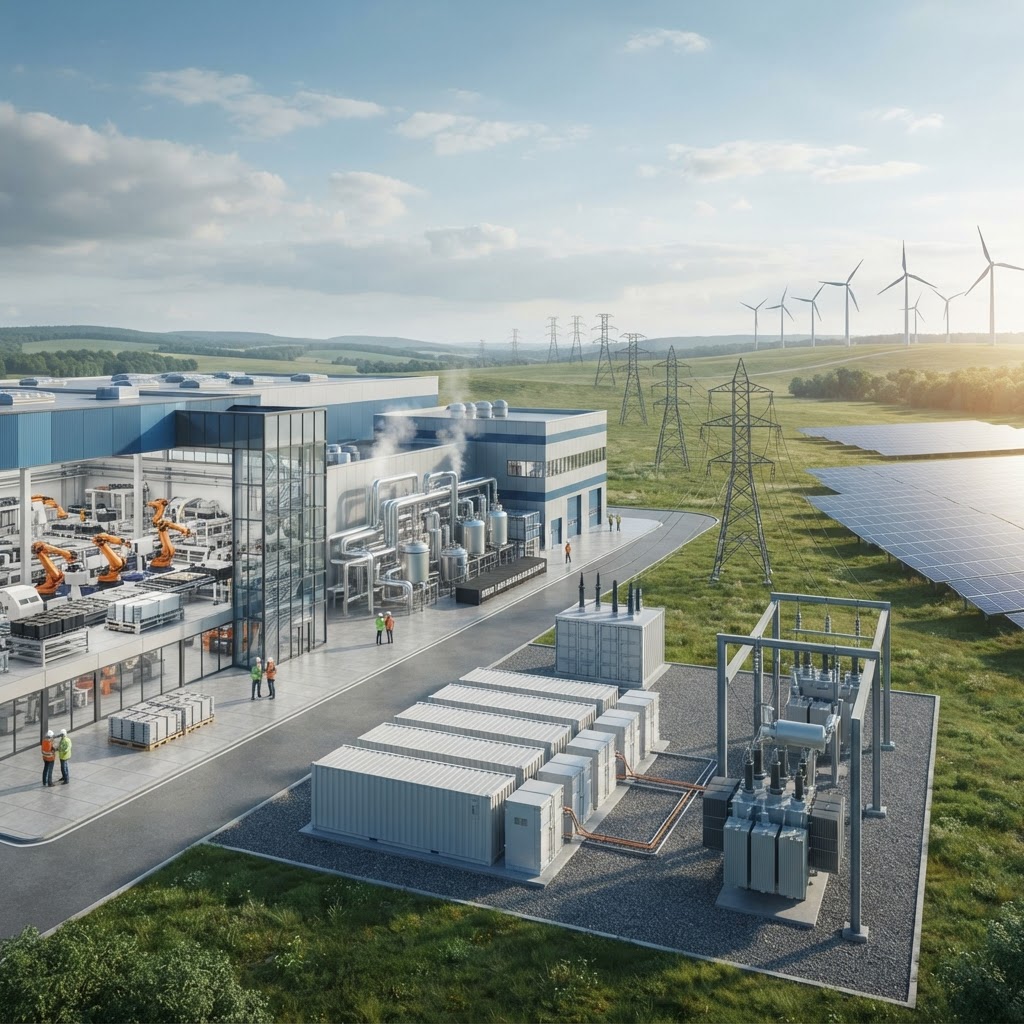
The U.S. Department of Energy has finalized a transformative $3 billion investment aimed at fortifying the domestic battery supply chain, selecting 14 projects to receive federal grants under the Bipartisan Infrastructure Law. This second phase of funding targets the midstream processing of critical minerals including lithium, graphite, and manganese, alongside the production of advanced battery components. By prioritizing domestic capacity, the initiative seeks to insulate the American energy transition from global supply chain volatility while catalyzing billions in private sector capital. The announcement underscores a strategic pivot in federal energy policy, focusing on the essential building blocks of the electric vehicle market and long-duration grid storage systems to ensure long-term energy security.
Key Findings
The $3 billion allocation is set to trigger a massive wave of industrial activity, with the DOE estimating that the selected projects will leverage a total investment exceeding $16 billion when accounting for private cost-share requirements. Key awardees include Dow, which received $100 million for battery-grade carbonate production, and Albemarle, slated for $67 million to support a commercial-scale lithium facility in North Carolina. The projects span 14 states and are projected to create over 8,000 construction jobs and 4,000 permanent positions. Crucially, the funding addresses specific bottlenecks in the U.S. critical minerals landscape. This includes the first commercial-scale domestic facility for synthetic graphite and large-scale production of high-purity manganese sulfate—a critical cathode material currently dominated by overseas suppliers. The grants also support the manufacturing of lithium iron phosphate (LFP) cathodes, a cheaper and more stable alternative to nickel-based chemistries that is gaining significant traction in the utility-scale storage sector. By focusing on these midstream processes, the DOE is effectively building a bridge between domestic extraction and final cell assembly, ensuring that the Inflation Reduction Act’s tax credits for clean vehicles remain accessible to manufacturers by meeting stringent domestic content requirements.
Industry Response
U.S. Energy Secretary Jennifer Granholm emphasized that the awards are a direct response to the need for a Made in America clean energy economy, stating that the U.S. is now in the driver's seat regarding the global battery manufacturing race. The response from the private sector has been overwhelmingly positive, with executives noting that federal backing provides the derisking necessary to greenlight capital-intensive infrastructure. Many recipients highlighted that these grants act as a multiplier, attracting institutional investors who previously viewed domestic mineral processing as too high-risk compared to established Asian markets. Industry analysts at BloombergNEF suggest that this injection of capital is essential for the U.S. to reach its goal of having EVs account for 50% of all new car sales by 2030. Trade groups, including the Battery Materials & Technology Coalition, praised the focus on midstream processing, arguing that without domestic refining and cathode production, the U.S. remains vulnerable to export controls from dominant global players. However, some industry observers cautioned that while the funding is a significant milestone, the speed of permitting and the development of a skilled workforce remain the primary hurdles to meeting the aggressive commissioning timelines set by the DOE for these new facilities.
What's Next
Looking ahead, the 14 selected companies will enter into detailed negotiations with the Department of Energy’s Office of Manufacturing and Energy Supply Chains (MESC) to finalize the terms of the grant agreements. The DOE expects these projects to reach commercial operation between 2026 and 2029, a timeline that aligns with the projected surge in domestic EV manufacturing capacity. Investors will be closely watching for the commencement of construction milestones, particularly for the high-priority synthetic graphite and manganese sulfate plants, which are viewed as litmus tests for the viability of U.S. midstream processing. Furthermore, this $3 billion tranche represents just one component of a broader federal strategy. The DOE still has significant lending authority through the Loan Programs Office (LPO) to complement these grants with low-interest debt financing. Market participants anticipate additional announcements regarding battery recycling and end-of-life management, as the policy focus shifts toward a circular battery economy. As these facilities come online, the focus will likely turn to the integration of these domestic materials into the supply chains of major automakers like Ford, GM, and Tesla, who are racing to qualify for the full $7,500 Section 30D clean vehicle tax credit.