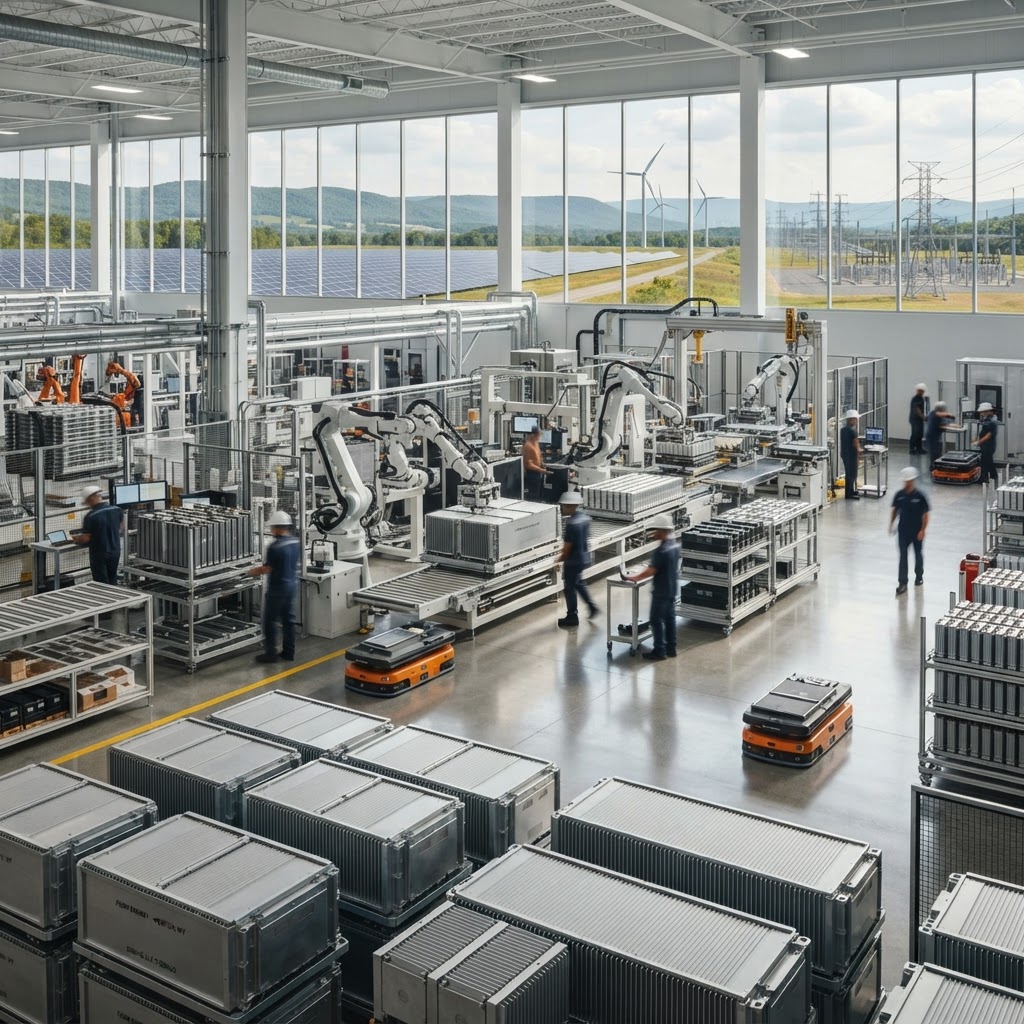
The long-duration energy storage sector reached a pivotal milestone this month as Form Energy accelerated production at its flagship manufacturing facility in Weirton, West Virginia. By successfully transitioning from pilot-scale operations to commercial-grade manufacturing, the company is now delivering its proprietary iron-air battery systems to utility customers. These systems, capable of providing 100 hours of discharge, are designed to address the critical challenge of multi-day renewable energy variability. As the U.S. grid faces increasing pressure from rising demand and the integration of intermittent wind and solar, Form Energy’s ability to scale domestic production offers a tangible pathway toward enhancing grid resilience and long-term reliability.
Key Findings
The deployment of iron-air technology represents a significant shift in the economics of grid-scale storage. Unlike traditional lithium-ion batteries, which are optimized for short-duration power, Form Energy’s iron-air systems utilize abundant, low-cost iron powder to store energy for up to 100 hours. This capability is essential for managing 'grid stress events' where renewable generation may be unavailable for several days. Industry analysis suggests that iron-air batteries can achieve a highly asymmetric payoff profile, as their low operational costs allow them to capture significant revenue during periods of high locational marginal pricing. With the global long-duration energy storage market projected to require up to 2.5 terawatts of capacity by 2040, the successful commercialization of this technology provides a scalable solution for deep decarbonization. The Weirton facility serves as the cornerstone of this effort, proving that advanced energy hardware can be manufactured at scale within the United States, thereby strengthening the domestic supply chain for critical energy infrastructure.
Industry Response
The industry has responded with cautious optimism, viewing Form Energy’s progress as a validation of the long-duration storage asset class. Investors and utility partners have noted that the company’s ability to secure signed contracts has been instrumental in de-risking its 'first-of-a-kind' (FOAK) projects, making them more attractive to infrastructure funds. Mateo Jaramillo, CEO of Form Energy, has emphasized the collaborative nature of this growth, citing the consistent support from the state of West Virginia as a key factor in the company’s ability to move from groundbreaking to production. Analysts at major energy firms have highlighted that while the clean energy sector faces a challenging capital-raising environment, companies with proven technology and clear commercial pathways—like Form Energy—are successfully leveraging new debt instruments and infrastructure funding. Trade groups and policymakers have also pointed to the Weirton site as a model for industrial revitalization, noting that the facility not only supports the energy transition but also creates high-skilled manufacturing jobs, reinforcing the link between climate policy and domestic economic development.
What's Next
The immediate focus for Form Energy is the continued expansion of its 'Form Factory 1' to meet the growing backlog of utility-scale orders. Following the successful launch of its first commercial units, the company is targeting a significant increase in installed capacity, with projections estimating 5 to 10 gigawatt-hours of iron-air storage online by 2028. This ramp-up will be supported by ongoing collaboration with partners like GE Vernova, which is helping to integrate these storage systems into broader grid architectures. Beyond the Weirton site, the broader market is watching for the performance data from these initial deployments, which will serve as a critical benchmark for future project financing. As the U.S. Department of Energy continues to evaluate applications for its loan guarantee programs, the success of Form Energy’s commercial rollout is expected to influence the bankability of other long-duration storage technologies. The next 18 months will be defined by the commissioning of larger utility projects, which will provide the empirical evidence needed to solidify iron-air batteries as a standard component of the modern, net-zero power grid.